
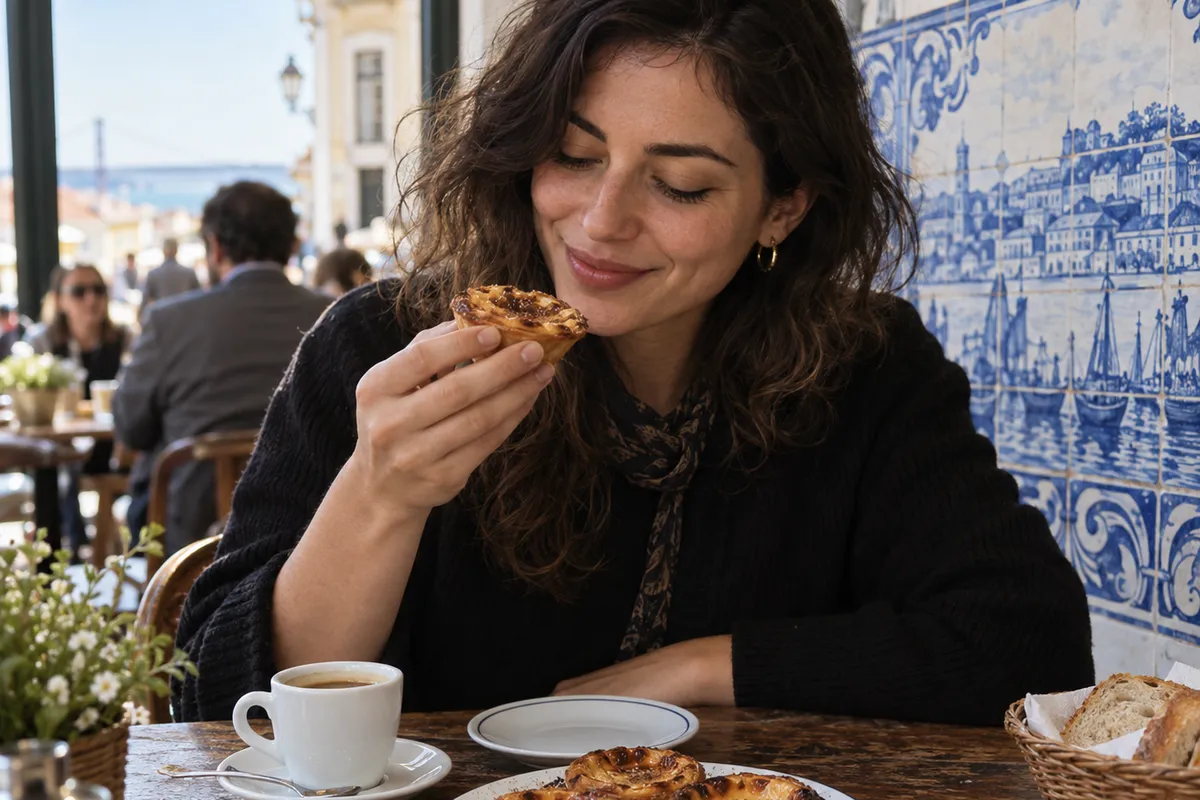
A neighborhood food crawl across Lisbon quickly exposes the divide between curated culinary showcases and the daily routines of resident diners. Navigating Lisbon food and markets: what to try and where to start requires looking past tourist crowds and understanding the structural differences between commercial gastro-halls, neighborhood municipal halls, and family-run tascas.
Over my seven years living in Lisbon, I have seen visitors lose considerable time and money to simple logistical errors. Diners frequently wait in sixty-minute queues for takeaway custard tarts, purchase off-season frozen sardines, or inadvertently pay illegal table starter fees. This guide provides an honest, fact-checked operational blueprint for eating well across the city in 2026, complete with actual prices, statutory dining rights, and neighborhood transit connections.
Lisbon Food and Markets: Modern Gastro-Halls vs. Historic Municipal Spaces
Time Out Market Lisboa at Mercado da Ribeira: Logistics, Cashless Rules, and Price Realities
The neoclassical hall of Mercado da Ribeira in Cais do Sodré houses two completely separate operations under one roof. The traditional eastern wing operates early morning produce, butchery, and fresh fish stalls trading Monday through Saturday from 06:00 AM to 02:00 PM. The western hall houses Time Out Market Lisboa, a commercial dining hub accommodating 26 restaurant concepts and 8 bars open daily from 10:00 AM to 00:00 AM (midnight).
Dining here means paying a substantial premium for convenience. Main courses created by well-known Portuguese chefs generally range from €14.00 to €26.00, roughly double the price of sit-down lunches in adjacent residential districts. The market operates on a strictly cashless basis across every food counter and bar, accepting only bank debit and credit cards. Visitors carrying only cash must walk to the Time Out Shop counter to purchase a pre-loaded market card, which requires a minimum cash load of €5.00 without additional issuance fees.
Seating follows a self-service communal bench layout without table reservations. Between 12:30 PM and 03:00 PM, and again from 08:00 PM to 10:00 PM, the central floor fills completely, creating intense competition for wooden stools. During my visits at lunch peaks, finding two adjacent seats routinely took twenty minutes of pacing the aisles while balancing hot plates. The most manageable windows for dining without stress are before 12:00 PM or after 10:00 PM.
| Feature | Mercado da Ribeira (Fresh Wing) | Time Out Market (Dining Hall) |
|---|---|---|
| Operating Hours | Mon–Sat: 06:00 AM – 02:00 PM (Closed Sun) | Daily: 10:00 AM – 00:00 AM (Midnight) |
| Payment Method | Cash preferred; domestic Multibanco | Strictly cashless (Cards or Time Out Card) |
| Price Level | Raw produce: €1.50 – €12.00/kg | Prepared mains: €14.00 – €26.00 |
| Seating Setup | No seating (market stalls only) | Unreserved shared wooden benches |
Practical ordering strategy: If visiting Time Out Market in a pair during peak hours, send one person to locate seats along the outer perimeter while the other orders. Food collection pagers function reliably up to roughly thirty meters from each counter stall.
Traditional Municipal Halls: Arroios, Alvalade, 31 de Janeiro, and Campo de Ourique
Lisbon municipal markets preserve authentic neighborhood retail culture away from downtown tour groups. Mercado de Arroios, housed within an unusual circular dome right by the Arroios metro station (Linha Verde), and Mercado de Alvalade Norte (Alvalade metro station, Linha Verde) trade Monday through Saturday from 07:00 AM or 07:30 AM to 02:00 PM. Both markets focus on seasonal regional produce, artisan cheese, and coastal seafood at standard neighborhood prices.
Mercado 31 de Janeiro, positioned between the Picoas and Saldanha metro stations, operates Tuesday through Saturday from 07:00 AM to 02:00 PM. It is widely recognized as the city center's primary wholesale fish market for professional chefs. On the upper floor, the traditional seafood restaurant Casa do Peixe prepares market-fresh catches landed that morning. Across every municipal hall in Portugal, fresh fish stalls remain closed on Mondays because coastal fishing fleets do not operate on Sunday nights.
Further west, Mercado de Campo de Ourique operates a hybrid format combining morning vendor stalls with an integrated central food hall. It opens Sunday through Wednesday from 10:00 AM to 11:00 PM, and Thursday through Saturday from 10:00 AM to 01:00 AM. This market does not have direct underground rail access; the nearest metro stop is Rato (Linha Amarela), located a steep 1.1-kilometer uphill walk away. Visitors should take Carris bus lines 709 or 774, or historic tram 28E or 25E directly to the market entrance.
| Municipal Market | Metro / Transit Connection | Operating Schedule | On-Site Food Highlights |
|---|---|---|---|
| Mercado de Arroios | Arroios (Linha Verde) | Mon–Sat: 07:00 AM – 02:00 PM | Regional cheeses, local snack counters |
| Mercado de Alvalade Norte | Alvalade (Linha Verde) | Mon–Sat: 07:00 AM – 02:00 PM | Butchers, bakery items, fresh fruit |
| Mercado 31 de Janeiro | Picoas / Saldanha | Tue–Sat: 07:00 AM – 02:00 PM | Casa do Peixe (seafood on upper level) |
| Mercado de Campo de Ourique | Bus 709/774, Tram 28E (Rato is 1.1 km) | Sun–Wed: 10:00–23:00; Thu–Sat: 10:00–01:00 | Gastro-hall stalls, petiscos, draft beer |
Monday market rule: Never schedule a municipal market tour on a Monday if you want fresh seafood. Fish stalls are closed nationwide, and Mercado 31 de Janeiro closes its entire building on Sundays and Mondays.
Feira da Ladra and Street Food Petiscos: Tuesday and Saturday Market Dynamics
The city's historic flea market, Feira da Ladra, occupies the open pavement of Campo de Santa Clara behind the National Pantheon. The market trades exclusively on Tuesdays and Saturdays from 09:00 AM to 06:00 PM, regardless of seasonal weather. Vendors lay out vintage tiles, books, hardware, and antiques on canvas sheets, accompanied by small perimeter kiosks serving traditional petiscos.
Eating here revolves around quick sidewalk orders: cold draft beer, marinated octopus salad, cod fritters, and braised pork sandwiches eaten standing up. Street vendors and pop-up food stalls throughout Campo de Santa Clara do not operate payment card terminals. You must carry physical cash in small denominations like €5.00 and €10.00 notes, as market sellers rarely have change for €50.00 banknotes.
Crowds gather densely along the steep cobblestone slopes of Santa Clara by mid-morning. The public tram line 28E heading to the flea market and the crowded market lanes are formally designated by Lisbon police as high-risk zones for opportunistic pickpockets. Keep valuables in zippered front pockets or under your coat, leaving bulky backpacks secured.
- Arrival window: Arrive before 10:30 AM to browse stalls and order snacks before midday queues form.
- Payment preparation: Carry €15.00 to €20.00 in coins and small bills; card machines are absent on the market street.
- Transit advice: Take tram 28E early, or walk ten minutes uphill from the Santa Apolónia train and metro terminal.
Everyday Tasca Culture: Ordering Prato do Dia and Counter Sandwiches
The Tasca Tradicional Lunch Ritual: Decoding Prato do Dia Menus and Daily Schedules
The neighborhood tasca tradicional remains the foundation of Lisbon's daily dining economy. Identifiable by paper table covers, street-facing window menus hand-written on printer paper, and metal counters, tascas cater to neighborhood workers. If you are structuring your stay and deciding where to stay in Lisbon, having these authentic establishments within walking distance of your room is a practical advantage.
The centerpiece of tasca dining is the weekday Prato do Dia (dish of the day), served strictly between 12:00 PM and 02:30 PM or 03:00 PM. Priced between €8.50 and €13.00 across residential neighborhoods, this lunch special typically includes a bread roll, a generous main dish with rice and fries, a draft beer or house wine, and a short espresso. The most sought-after daily specials sell out quickly; arriving past 01:30 PM usually leaves only one or two kitchen options remaining.
Reading handwritten daily menus requires knowing local portion sizes. A meia dose (half portion) represents a single plate that easily satisfies one hungry adult. A dose inteira (full portion) arrives as a large serving platter meant for two or three diners sharing. When ordering wine, asking for vinho da casa brings a simple ceramic or glass jug (jarro) containing 0.5 liters or 1.0 liter of regional table wine at low cost.
- Prato do Dia (€8.50 – €13.00): Complete weekday lunch with bread, main dish, beverage, and coffee.
- Meia dose: Standard single-portion main plate for one diner.
- Dose inteira: Large shared platter for two to three people.
- Vinho da casa: Economical house table wine served by the half-liter or full-liter jug.
Counter Culture: Classic Pork Bifana Sandwiches and Fast Casual Snacking
Fast-casual eating in Lisbon centers on metal snack bar counters (*ao balcão*). The cornerstone of this routine is the bifana, a sandwich consisting of thinly sliced pork steaks simmered for hours in a stainless steel vat with white wine, lard, garlic, and sweet paprika. The pork is tucked into a crusty Portuguese bread roll (*papo-seco*) that absorbs the seasoned cooking broth.
Historic downtown counters like As Bifanas do Afonso on Rua da Madalena charge between €3.00 and €3.50 per sandwich. Counter protocol is rapid: you order directly from the line chef or counter attendant, receive the hot sandwich on a paper napkin, and apply condiments displayed on the metal ledge. Authentic etiquette calls for yellow mustard (*mostarda*) and fiery chili oil (*molho de piri-piri*).
Locals pair the bifana with an *imperial*—a chilled 200 ml (20 cl) pour of draft lager. Note that in Lisbon and southern Portugal, draft beer in this size is exclusively ordered as an *imperial*. Asking for a *fino* marks you as someone using northern Portuguese vocabulary from Porto, though staff will still understand your request.
How to order at a packed counter: Catch the attendant's eye and say clearly: "Uma bifana e uma imperial, por favor". Keep coins ready to pay immediately when the plate lands on the stainless counter.
Portuguese Classics: What to Try in Lisbon Beyond the Guidebooks
Seafood Specialties: Polvo à Lagareiro, Amêijoas à Bulhão Pato, and Seasonal Sardinhas Assadas
Lisbon's seafood repertoire relies on simple preparation and clean Atlantic flavors. Two dishes anchor traditional tavern menus year-round: Polvo à Lagareiro and Amêijoas à Bulhão Pato. Polvo à Lagareiro consists of whole octopus tentacles boiled tender, then roasted in baking dishes with crushed, skin-on potatoes (*batatas a murro*), thoroughly submerged in extra-virgin olive oil and minced garlic.
Amêijoas à Bulhão Pato presents fresh clams steamed open in olive oil, crushed garlic, dry white wine, and generous handfuls of fresh coriander, finished with squeezed lemon juice. The resulting broth is scooped up with crusty bread throughout the meal. These staples are reliable across mid-range marisqueiras and tascas throughout central and western Lisbon.
Grilled Atlantic sardines (*sardinhas assadas*) follow a strict seasonal calendar. Fresh sardines are caught and grilled exclusively from June through late October, reaching their fattest, most flavorful peak during June's Festas dos Santos Populares. If a dining spot advertises grilled sardines from November through May, they are serving frozen inventory (*congelado*), which yields dry, mushy meat that sticks to the skin.
| Seafood Specialty | Primary Ingredients | Availability Window | Quality Indicators |
|---|---|---|---|
| Polvo à Lagareiro | Tender octopus, roasted potatoes, garlic, olive oil | Year-round | Crispy exterior skin, completely tender meat |
| Amêijoas à Bulhão Pato | Clams, garlic, olive oil, white wine, fresh coriander | Year-round | Shells fully opened, fragrant coriander broth |
| Sardinhas Assadas | Whole fresh sardines, coarse Atlantic sea salt | June to late October strictly | Plump glistening skin, no sour frozen fat flavor |
Sardine season marker: Avoid ordering grilled sardines between November and May. Authentic taverns remove fresh sardines from their boards during winter and spring because seasonal fishing quotas and natural biological cycles halt the Atlantic catch.
Comfort Classics: Bacalhau à Brás, Caldo Verde, and Neighborhood Cervejaria Feasts
Salted Atlantic cod (*bacalhau*) is Portugal's staple ingredient, said to be prepared in over 365 distinct ways. For visitors, the most accessible preparation is Bacalhau à Brás. The dish combines shredded desalted cod with caramelized onions, matchstick straw potatoes (*batata palha*), and beaten eggs folded gently over low heat until creamy, garnished with fresh parsley and black olives.
For a lighter opening course, Caldo Verde offers comforting, straightforward sustenance. Originating in the northern Minho province but ubiquitous across Lisbon tascas, the soup features an emulsion of potatoes, onions, and garlic puree, through which finely shredded Portuguese flat cabbage (*couve-galega*) is boiled briefly. Every traditional bowl is finished with a drizzle of olive oil and a slice of smoky pork sausage (*chouriço de carne*).
Full seafood feasts take place in lively beer halls known as *cervejarias*. Diners select crabs, lobsters, and barnacles priced by the kilogram from saltwater tanks, accompanied by cold beer. At the conclusion of a heavy shellfish meal, Lisbon custom dictates ordering a prego no pão—a thin beef steak seasoned with garlic and mustard inside a bread roll—which functions as a savory "dessert" to balance the palate after rich shellfish courses.
- Bacalhau à Brás: Flaked cod, matchstick potatoes, and creamy scrambled eggs; an ideal introduction to cured cod.
- Caldo Verde: Silky potato-garlic soup loaded with thinly sliced green cabbage and sliced chouriço.
- The Cervejaria Prego: Garlic beef steak roll traditionally eaten at the very end of a seafood feast.
Sweet Traditions and Counter Rituals: Pastéis, Espresso, and Ginjinha
The Pastel de Nata Landscape: Antiga Confeitaria de Belém vs. Boutique and Neighborhood Pastelarias
The iconic custard tart has defined Lisbon baking since the closure of religious orders in the 1830s. The original version originated at the Mosteiro dos Jerónimos and has been baked under proprietary trade secrets at the Antiga Confeitaria de Belém since 1837. If you are organizing a visit to the monuments described in this Belém guide: monuments, riverside walks and practical planning, sampling these pastries warm from the oven is a standard stop.
An original Pastel de Belém costs €1.60 per pastry, or €9.60 for a six-pack box, dusted with powdered sugar and cinnamon. Across Lisbon, specialized boutique bakeries have elevated competition. Manteigaria sells hot custard tarts for €1.50 each (€9.00 for six), while Castro charges €1.60 per unit (€9.60 for six). Meanwhile, standard neighborhood pastelarias across residential districts charge between €1.10 and €1.50 per pastry.
The sidewalk queue outside Antiga Confeitaria de Belém often stretches dozens of meters along Rua de Belém, deterring passersby. However, this visible exterior line is solely for takeaway counter sales. The historic building contains an interior labyrinth of interconnected dining halls accommodating over 400 seated guests. Bypassing the sidewalk queue and walking directly through the main doors typically leads to an open table with full table service within five to ten minutes.
| Pastry Shop Type | Example Venues | Single Unit Price | Box of 6 Price |
|---|---|---|---|
| Historic Original | Antiga Confeitaria de Belém | €1.60 | €9.60 |
| Boutique Specialist | Castro | €1.60 | €9.60 |
| Boutique Specialist | Manteigaria | €1.50 | €9.00 |
| Neighborhood Pastelaria | Local residential cafes | €1.10 – €1.50 | €6.60 – €9.00 |
Belém queue shortcut: Never stand in the long outdoor sidewalk queue on Rua de Belém. Walk directly into the interior hallways of Antiga Confeitaria de Belém; open seating in the back salons turns over quickly throughout the day.
Coffee and Digestifs: Counter Bica Espresso Pricing and Historic Ginjinha de Lisboa Kiosks
Coffee consumption in Lisbon follows specific retail pricing rules. An espresso, referred to locally as a bica, costs between €0.80 and €1.00 when consumed standing at a traditional pastelaria counter (*ao balcão*). Under Portuguese commercial law, businesses maintain higher pricing menus for seated terrace tables (*esplanadas*), where table service incurs legal surcharges ranging from 20% to 50% above the base counter tariff.
Portuguese coffee orders require precise terminology: a bica is a short, concentrated dark roast espresso; a galão consists of one-quarter espresso and three-quarters hot milk served in a tall glass tumbler; a meia de leite mixes equal parts coffee and steamed milk in a ceramic cup. Clear counter ordering keeps morning transactions smooth and economical.
For afternoon digestifs, historic hole-in-the-wall bars near Rossio Square serve ginjinha, an infusion of sour Morello cherries, alcohol, and sugar. At establishments like A Ginjinha do Rossio, a small glass shot costs between €1.50 and €1.80. The server will ask "Com ou sem elas?", asking whether you want your shot with or without alcohol-steeped cherries at the bottom. Traditional Lisbon establishments serve ginjinha strictly in glass shot glasses; modern chocolate cups (*copinhos de chocolate*) are commercial novelties originating in the medieval town of Óbidos.
- Bica (€0.80 – €1.00): Traditional short espresso taken standing at the counter.
- Galão: Milky coffee (1:3 ratio) served in a tall glass tumbler.
- Meia de leite: Half coffee, half milk served in a standard ceramic cup.
- Ginjinha (€1.50 – €1.80): Sour cherry liqueur shot, traditionally served in glass at Rossio.
Consumer Rights and Dining Etiquette: Couvert Charges, Payments, and Regulations
The Couvert Trap: Portuguese Consumer Law, ASAE Food Regulations, and Untouched Starters
When you sit down at almost any sit-down restaurant in Lisbon, waitstaff will immediately place small plates on your table: bread baskets, butter packets, marinated olives, rounds of sheep cheese, or tuna pate. Many international travelers assume these appetizers represent complimentary hospitality. They do not; these items constitute the restaurant's couvert, with each plate priced individually on the menu.
Under Portuguese Consumer Law, specifically Decreto-Lei n.º 10/2015 (Article 135, item 3), dining establishments are legally prohibited from charging for any unsolicited food items or starters unless the diner actively consumes them or specifically requests them. If the couvert sits untouched on your table throughout the meal, it cannot legally appear on your final invoice.
Unlawfully billing patrons for untouched couvert items is classified as a light economic infraction (*contraordenação económica leve*) under Article 123(3) of the RJACSR framework. The economic security authority ASAE enforces statutory fines under Decreto-Lei n.º 9/2021 (Article 18): fines range from €150 to €500 for individual owners, €250 to €1,500 for micro-enterprises, and up to €12,000 for large corporate operations. If you do not wish to consume the appetizers, decline them upon arrival with a polite "Não queremos, obrigado" and ask the server to physically clear the plates.
Protecting your bill: If an unsolicited, untouched couvert item appears on your final receipt, point to the line and request its removal under Decreto-Lei n.º 10/2015. Waitstaff will promptly deduct the charge without dispute.
Payments, Service Fees, and Livro de Reclamações: Navigating Multibanco Limits and Cash Norms
Payment terminal compatibility catches many visitors off guard. Numerous traditional tascas and municipal market stalls operate basic point-of-sale terminals connected solely to Portugal’s domestic SIBS interbank network (Multibanco / MB WAY). These terminals do not hold cross-border clearing contracts; inserting or tapping an international Visa or Mastercard results in an immediate "Cartão Inválido" or "Operação Não Permitida" error message.
Signs reading "Apenas Multibanco" or "Não aceita cartões estrangeiros" alert patrons to this limitation. To avoid awkward searches for bank machines mid-meal, carry €20.00 to €30.00 in physical cash daily. If cash runs low, withdraw funds exclusively from official bank ATMs displaying the blue-and-white "MB" Multibanco logo. Avoid yellow-and-blue Euronet cash machines, which impose predatory dynamic conversion rates and steep foreign usage surcharges.
Table service is included by law in all Portuguese food pricing; adding mandatory service charges or tip percentages to the bill is illegal. Leaving a gratuity is voluntary: leaving small coins rounding up the bill is customary in neighborhood tascas, while 5% to 10% in cash rewards attentive service in full-service dining rooms. Finally, if you experience overt billing malpractice or hygiene failures, every licensed food business is mandated by Decreto-Lei n.º 156/2005 to immediately hand you the physical complaints ledger, known as the Livro de Reclamações.
- Multibanco limitation: Traditional tascas frequently decline non-Portuguese credit cards; carry backup cash.
- Service fees: Service is legally built into menu prices; mandatory tipping lines are unlawful.
- Complaints ledger: The red physical Livro de Reclamações must be presented on-site immediately upon verbal request.
Planning and Strategic Verdict: Where to Start Your Lisbon Food Tour
Reservations, Peak Queues, and Walk-In Reality: Managing TheFork and Cervejaria Ramiro
Dining logistics in Lisbon have changed noticeably, requiring smart scheduling for popular venues. Mid-range bistros, modern petisqueiras, and upscale seafood houses manage their tables through the online platform TheFork Portugal or embedded website reservation forms. Booking two to four days ahead is necessary for dinner slots between 08:00 PM and 10:00 PM on weekends, especially when coordinating meals with a busy itinerary like this three days in Lisbon: a realistic first-trip itinerary.
No venue demonstrates peak queues quite like Cervejaria Ramiro on Avenida Almirante Reis. Ramiro operates from Tuesday through Sunday from 12:00 PM to 00:30 AM without an afternoon break, closing on Mondays. Visitors attempting a walk-in between 07:00 PM and 09:30 PM consistently face pavement wait times of 60 to 90 minutes after pulling a paper ticket from the electronic queue dispenser outside.
To bypass these crowds, take advantage of the continuous afternoon operating hours. Arriving right at the 12:00 PM opening guarantees immediate seating, as does visiting between 03:30 PM and 05:30 PM on weekday afternoons. Alternatively, reserve a table through TheFork for designated afternoon allocations, or explore neighborhood cervejarias in Arroios or Campo de Ourique that serve fresh shellfish to neighborhood residents with minimal wait times.
| Dining Venue | Platform / Booking Method | Walk-In Queue Risk | Optimal Arrival Window |
|---|---|---|---|
| Cervejaria Ramiro | TheFork / Walk-in paper ticket | 60–90 min (19:00 – 21:30) | 12:00 sharp, or 15:30 – 17:30 |
| Time Out Market | No bookings (communal tables) | 20–30 min to locate seats | Before 12:00 or after 22:00 |
| Traditional Tascas | Walk-in only (no reservations) | 10–15 min at peak lunch | 12:15 – 12:45 PM for best dishes |
| Neighborhood Seafood | Direct phone / TheFork | 15–30 min on weekends | 13:00 for lunch, 19:30 for dinner |
Ramiro waiting protocol: If you find yourself in the evening queue at Ramiro, draw your numbered ticket from the machine at the door. An outdoor service window dispenses cold draft beer while you monitor the digital number board over the entrance.
Final Verdict: Balancing Budget Tascas, Fresh Markets, and Gastro-Halls
A sensible food budget in Lisbon balances casual tasca lunches, fresh market grazing, and selective dinners at modern dining halls. Trying to eat every meal inside commercial food courts like Time Out Market strains your wallet and misses the community atmosphere of residential neighborhoods. Conversely, relying solely on neighborhood tascas means missing the creative seafood cooking of Lisbon's contemporary chefs.
Plan your daily food expenditure around two distinct spending profiles:
- Daily budget routine (€18.00 – €25.00 per person): Morning bica espresso and pastel de nata at a local pastelaria counter (€2.00 – €2.50); complete sit-down Prato do Dia lunch with wine and coffee at a neighborhood tasca (€8.50 – €12.00); evening pork bifana with an imperial draft beer at a traditional counter (€4.50 – €5.50).
- Gourmet discovery routine (€50.00 – €80.00 per person): Morning coffee and warm pastries at Belém or Castro (€3.50 – €5.00); signature chef lunch mains and craft drinks inside Time Out Market (€20.00 – €28.00); comprehensive evening cervejaria feast featuring amêijoas, crab, and wine (€35.00 – €55.00).
For your initial morning in the city, start at 08:30 AM inside an active municipal produce hall such as Mercado de Alvalade Norte or Mercado 31 de Janeiro to see the Atlantic catch arrive. Transition to a nearby family tasca before 01:00 PM for the daily lunch plate, saving gastro-halls and lively beer taverns for relaxed evening meals.