
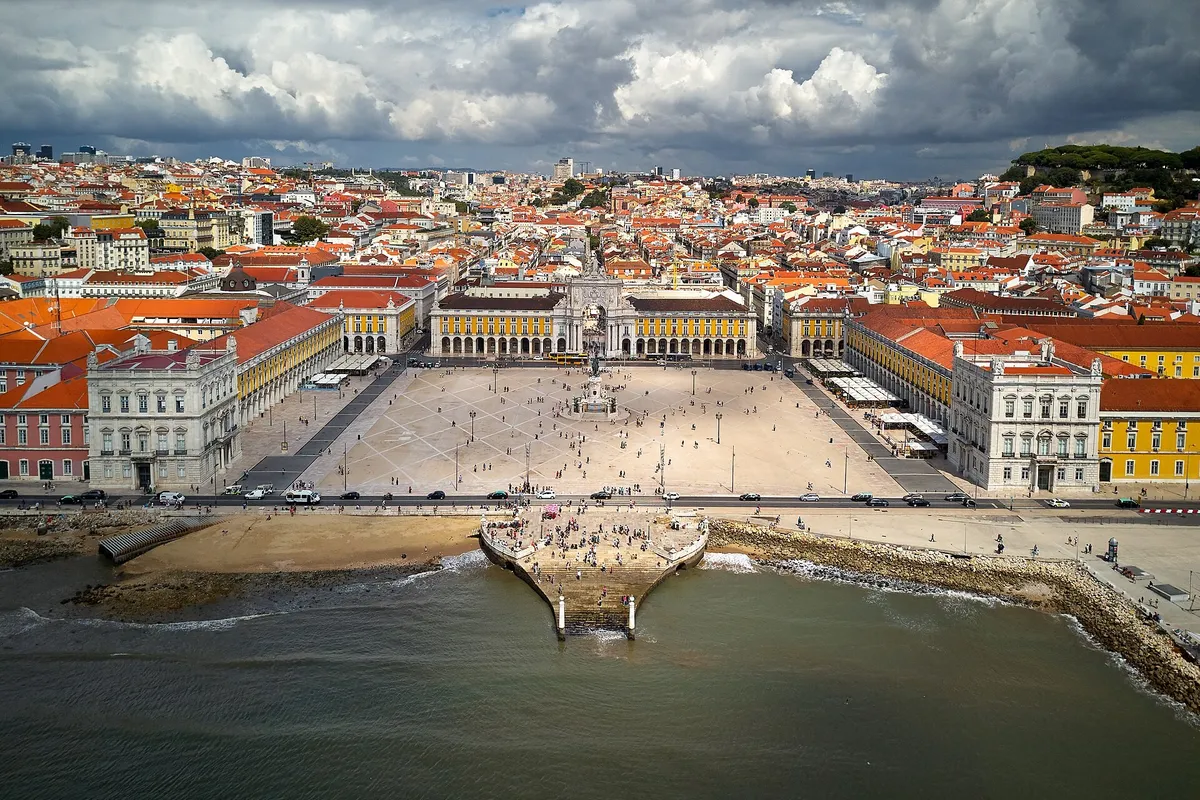
Choosing where to stay in Lisbon: choosing the right neighbourhood determines your physical effort, sleep quality, and daily transit expenses far more than your hotel rating. The city stretches across seven steep ridges paved in uneven limestone, meaning two accommodations separated by 400 meters on a map can involve an exhausting vertical climb or an unnavigable flight of stairs.
In seven years of mapping walking routes across these quarters, I have seen countless travelers struggle to drag heavy rolling suitcases up basalt steps or discover that their historic apartment sits directly above an open-air bar street. Evaluating Lisbon's distinct districts before booking protects your budget and prevents severe logistical headaches.
Topography, Transit, and Accommodation Regulations in Lisbon
Physical Realities: Hills, Cobblestones, and Transit Fares
Lisbon's central ridges feature steep street inclines running between 15% and 20%. Traditional hand-laid limestone and basalt cobblestones, known as calçada portuguesa, cover almost every pedestrian path outside modern commercial avenues. These stones quickly damage the wheels of standard hard-shell suitcases and become slick when exposed to rain or morning humidity.
Historic wooden Remodelado trams like Tram 28E (Eléctrico 28) and Tram 12E offer no relief for luggage logistics. Operators routinely refuse boarding to passengers carrying large bags due to tight aisles and extreme passenger volume. Navigating the transit network requires understanding the 2026 payment structures approved by CARRIS and Metropolitano de Lisboa:
- Navegante occasional card: Costs €0.50 to purchase, remains valid for 12 months, and cannot be shared between multiple passengers during a trip.
- Zapping pay-as-you-go credit: Loading credit onto a Navegante card reduces a single Carris bus, tram, or metro journey to €1.72, compared to the standard single ticket price of €1.90.
- Contactless bank card tap: Tapping a physical bank card or digital wallet directly at metro turnstiles incurs a flat rate of €1.92 per ride across the entire network.
- 24-hour network pass: Costs €7.25 and covers unlimited travel on Lisbon metro lines, city buses, funiculars, and historic trams.
- Onboard cash surcharges: Purchasing a paper ticket directly from the driver aboard historic trams costs €3.30 in cash, while the onboard cabin ticket for the Santa Justa Lift (Elevador de Santa Justa) costs €6.20 for up to two trips.
The Santa Justa Lift cabin is covered without extra cost by an active €7.25 24-hour pass or standard €1.72 Zapping balance. However, the upper viewing platform (Miradouro do Elevador de Santa Justa) requires a separate €5 admission ticket payable exclusively by bank card.
Legal Realities: Tourist Taxes, RNAL Licences, and SIBA Registration
Every commercial hotel and private holiday rental in Lisbon is governed by strict municipal and national regulations. The municipality charges a mandatory tourist tax (taxa municipal turística) of €4 per person per night for all guests aged 13 and older. This fee is capped at seven consecutive nights, reaching a maximum of €28 per person per stay, and is collected directly by the property at check-in.
Short-term rentals—classified locally as Alojamento Local (AL)—operate under restrictive zoning laws. Under municipal decree Aviso n.º 29926-A/2025/2, parishes where holiday rentals exceed 10% of total housing stock are placed under Absolute Containment (contenção absoluta). This rule blocks new short-term rental registrations in key tourist areas such as Santa Maria Maior and Misericórdia.
Legal rental apartments must display an official National Registry of Local Accommodation (RNAL) registration number on all booking platforms. If a listing lacks a verifiable RNAL number, it operates outside the legal framework and risks sudden cancellation. Furthermore, under Portuguese immigration law (Lei n.º 23/2007, articles 15 and 16), all lodging providers must submit guest identity and passport data to the SIBA platform within three working days of arrival.
Hosts requesting passport numbers, nationalities, and birth dates before arrival are fulfilling mandatory legal requirements under SIBA, not attempting identity theft.
Where to Stay in Lisbon: Historic Core of Baixa and Chiado
Baixa Pombalina: Flat Grid Planning and Central Logistics
Baixa Pombalina is the flat valley connecting Praça do Comércio on the riverfront to the bustling squares of Rossio and Praça da Figueira. Rebuilt following the 1755 earthquake, the district features wide pedestrian thoroughfares and distinctive 18th-century Pombaline cage architecture (gaiola pombalina). Its level geography makes it the easiest historic quarter for travelers seeking to avoid hills.
Central convenience commands elevated hotel rates. Across Lisbon, hotel prices average roughly €153 per night for 3-star properties, €205 to €220 for 4-star hotels, and €313 to €365 for 5-star properties. In Baixa, 4-star rates frequently climb to an average of €230 to €269 per night during peak and shoulder travel periods.
Staying in Baixa involves practical compromises. Many heritage buildings operate without passenger elevators, meaning top-floor apartments require climbing steep, narrow stairwells. Additionally, Lisbon enforces a vehicular ban barring tuk-tuks across 337 streets in historic parishes, preventing tourists from using motorized carts to transfer luggage down pedestrian avenues like Rua Augusta. Street noise from delivery vans and street performers starts early in the morning.
Chiado: Upscale Boutiques, Cultural Venues, and Ridge Connectivity
Perched on the slope immediately west of Baixa, Chiado serves as Lisbon's historic cultural and shopping district. Centered on Rua Garrett and Largo do Chiado, the neighbourhood contains heritage bookshops, historic theaters, high-end fashion boutiques, and grand cafés. Its central position allows guests to walk easily between riverside transit hubs and hilltop sights.
Accommodations in Chiado primarily consist of restored boutique hotels and established 4-star properties averaging €230 to €270 per night. Because Chiado falls under the Misericórdia parish, the Absolute Containment decree prohibits new short-term rental permits, keeping apartment availability low and private rental prices high throughout the year.
Moving between the Baixa valley floor and the Chiado ridge can be managed without tackling the steep incline of Calçada do Sacramento. Travelers can use the subterranean public escalators inside the Baixa-Chiado metro station, entering at Rua do Crucifixo and exiting at Largo do Chiado. While these escalators are free to transit pedestrians during metro operating hours, scheduled maintenance outages occur periodically, requiring a strenuous uphill walk if you are carrying bags.
Atmospheric Hillside Quarters: Alfama and Mouraria
Historic Character: Fado Houses and Panoramic Miradouros
Alfama is Lisbon's oldest surviving district, retaining a medieval street grid of narrow alleys, twisting stairways, and whitewashed houses draped with laundry. Mouraria, situated on the northern slope beneath the Castle of São Jorge, shares this dense layout and holds deep cultural roots as the historic birthplace of Fado music. Both neighbourhoods offer an intimate residential atmosphere defined by neighborhood taverns and quiet courtyards.
The primary appeal of staying in Alfama lies in its sweeping river views and access to renowned viewpoints (miradouros). Miradouro de Santa Luzia features decorative azulejo tile walls overlooking Tagus waters, while Miradouro das Portas do Sol provides elevated views across Alfama's red terracotta rooftops. In Mouraria, steep pedestrian staircases (escadinhas) connect diverse multicultural eateries and small local guesthouses.
Neither quarter offers modern luxury chain hotels. Instead, lodging consists almost entirely of micro-apartments and independent guesthouses adapted from 19th-century walk-ups. While the atmosphere feels deeply traditional, daily living requires navigating uneven stone paths and managing persistent dampness typical of centuries-old solid stone walls.
Transport Restrictions: Narrow Alleys, Tuk-Tuk Bans, and Luggage Logistics
Transporting luggage into Alfama or Mouraria is among the most demanding logistical challenges in Lisbon. The municipal regulation barring tourist tuk-tuks from 337 historic streets completely eliminates them as private luggage shuttles. Furthermore, ride-hailing vehicles and standard taxis cannot navigate the pedestrian lanes (becos) and staircases that define the district.
Drivers can drop passengers only at perimeter road access points, such as Largo das Portas do Sol, Miradouro de Santa Luzia, Chafariz de Dentro, or Largo dos Trigueiros. From these vehicle drop-off zones, travelers must drag their luggage between 200 and 400 meters over steep, unpolished calçada portuguesa. As I have observed along the descent from Portas do Sol, standard suitcase wheels quickly jam and chip against the irregular stone surfaces.
Relying on public transport for arrival is equally difficult. Historic Tram 28E winds through Alfama along Rua das Escolas Gerais, but drivers refuse boarding to anyone with large suitcases, and passenger cars remain packed from morning until dusk. Travelers booking private rentals in Alfama (parish of Santa Maria Maior) must also ensure their accommodation displays an active RNAL registration number.
Never book an apartment in Alfama or Mouraria with heavy wheeled luggage unless you have verified the exact walking distance and number of stairs from the nearest perimeter taxi drop-off point.
Nightlife Districts: Evaluating Bairro Alto and Cais do Sodré
Bairro Alto: Bohemian Dining, Steep Declines, and Nighttime Ordinances
Bairro Alto sits on the high ridge above Baixa, laid out in an orderly 16th-century grid of narrow residential streets. During daylight hours, the quarter appears quiet, with sleepy cafes and traditional textile workshops. After sunset, the neighbourhood shifts into Lisbon's historic nightlife district, packed with tascas, small cocktail bars, and music lounges along Rua da Atalaia and Rua do Diário de Notícias.
The central difficulty of staying in Bairro Alto is nighttime decibel levels. Most residential buildings date from the 19th century and feature single-glazed sash windows that offer minimal acoustic insulation. Interior bar operations run until 02:00 to 04:00 on weekends, generating persistent crowd noise and bass reverberation directly beneath bedroom windows.
To curb antisocial behavior, Lisbon enforces a citywide ban on takeaway alcohol sales and street drinking outside licensed esplanadas from 23:00 to 08:00 (Sunday to Thursday) and midnight to 08:00 (Fridays, Saturdays, and holiday eves). Violations carry administrative fines between €150 and €1,000 for individual consumers and €350 to €3,000 for retail establishments. While this ordinance has reduced massive street congregations, patrons entering and leaving venues continue to generate significant noise until closing time.
Cais do Sodré: Waterfront Transit and Pink Street Noise
Cais do Sodré occupies the Tagus riverfront at the base of the Bairro Alto ridge. Formerly a gritty maritime port, it has transformed into a culinary and nightlife district centered on the Time Out Market and the nightlife strip of Pink Street (Rua Nova do Carvalho). Bars and subterranean music clubs here stay active until 04:00, creating severe nighttime noise for properties within 150 meters of the strip.
Despite its nightlife intensity, Cais do Sodré offers outstanding public transit connections. The multimodal station functions as a primary transit nexus:
- The southern terminus of the Lisbon Metro Green Line (Linha Verde), providing direct access north through Rossio and Martim Moniz.
- The passenger terminal for the CP Linha de Cascais suburban railway, running frequent coastal trains to Estoril and Cascais beaches.
- The river ferry dock operated by Transtejo Soflusa, providing regular crossings across the Tagus River to Cacilhas.
Securing quiet sleep in Cais do Sodré requires careful location selection. Travelers seeking good transit connections while avoiding street noise should look strictly two to three blocks north of the riverfront, targeting properties near Praça Dom Luís I or along Rua de São Paulo that explicitly feature certified acoustic double glazing.
Upscale Boulevards: Avenida da Liberdade and Príncipe Real
Avenida da Liberdade: Five-Star Boulevards and Metro Links
Modeled after the grand boulevards of Paris, Avenida da Liberdade is a wide 19th-century avenue extending 1.1 kilometers from Praça dos Restauradores to Praça Marquês de Pombal. Shaded by mature plane trees, the central boulevard features broad, flat pedestrian walks, formal gardens, open-air cafe kiosks, and international luxury fashion boutiques.
The avenue serves as Lisbon's primary enclave for luxury accommodation, where 5-star properties regularly command between €313 and €365 per night, with premium suites exceeding those figures. The district also houses modern 4-star business properties that offer modern amenities, including spacious elevators, dedicated luggage storage, and full wheelchair accessibility.
Transit accessibility along the corridor is exceptionally straightforward. The Metro Blue Line (Linha Azul) runs directly beneath the avenue, serving three stations: Restauradores, Avenida, and Marquês de Pombal. Travelers can tap through turnstiles using standard contactless bank cards for €1.92 per ride. However, visitors must be aware that while the central avenue itself is flat, side streets branching eastward toward Santa Marta or westward toward São José immediately climb at steep 12% to 15% gradients.
When reviewing hotels listed as 'near Avenida da Liberdade,' check their address on a street map. Properties located just 50 meters off the main avenue on side streets may require a strenuous vertical walk up steep cobblestones.
Príncipe Real: Boutique Stays, Garden Plazas, and Architectural Character
Príncipe Real sits along the ridge crest immediately north of Bairro Alto, centered around the landscaped gardens of Jardim do Príncipe Real and Praça das Flores. The quarter is characterized by grand 19th-century mansions (palacetes), independent concept design stores, antique shops, and upscale residential dining. It offers an elegant neighbourhood atmosphere without the late-night street noise found in nearby Bairro Alto.
The district boasts panoramic city views from the terraced gardens of Miradouro de São Pedro de Alcântara. Accommodation consists primarily of high-end boutique properties, converted historical townhouses, and design-led guesthouses. Because the parish of Misericórdia restricts new holiday rentals, availability is limited, and room rates remain in the upper tier.
Public transit options require advance planning, as no metro line runs directly along the top of the ridge. Travelers reach the district by taking the historic Tram 24E from Praça Luís de Camões, riding the Ascensor da Glória funicular from Praça dos Restauradores, or walking ten minutes uphill from the Rato metro station on the Yellow Line (Linha Amarela). The quiet atmosphere and independent retail make Príncipe Real well suited to travelers who prioritize residential charm over direct subway connectivity.
Modern Commercial Hubs: Saldanha and Avenidas Novas
Saldanha and Avenidas Novas: Contemporary Hotels and Flat Urban Terrain
Avenidas Novas is a broad, 20th-century residential and financial district extending north from Praça Duque de Saldanha. Laid out with wide streets and level concrete sidewalks, this quarter is entirely free of the steep hills, staircases, and worn cobblestones that complicate travel in the historic center. Major retail destinations, such as the El Corte Inglés department store at São Sebastião, anchor the area.
The hospitality stock in Saldanha consists primarily of purpose-built contemporary chain hotels. These properties provide dependable amenities often missing from historic conversions: modern soundproof double glazing, high-capacity passenger elevators, accessible ramp entrances, and private underground parking. Pricing is highly competitive, with 3-star hotels averaging €153 and 4-star properties ranging between €205 and €220 per night.
The practical trade-off is atmosphere. Saldanha and Avenidas Novas lack the architectural patina, historic alleys, and Fado taverns of old Lisbon. Corporate offices dominate the avenues, causing sidewalks to empty out after normal business hours. Reaching the historic waterfront or central sights requires a 10- to 15-minute underground transit ride.
Airport and Transit Efficiency: Direct Links via the Linha Vermelha
For visitors prioritizing swift airport transfers and zero-stair logistics, Saldanha offers unmatched geographic advantages. Lisbon Humberto Delgado Airport connects directly to the urban subway network via the Aeroporto station on the Metro Red Line (Linha Vermelha). Trains run directly from the terminal to Saldanha and São Sebastião in roughly 20 minutes without luggage transfers or line switches.
Riding the metro from the airport costs just €1.72 using Zapping credit on a Navegante occasional card, or €1.92 with a contactless bank card tap at the turnstiles. In comparison, airport taxis and ride-hailing services frequently run between €15 and €25, often encountering gridlocked vehicular traffic around central roundabouts during morning and evening rush hours.
Saldanha also functions as a central subway transfer node. The Saldanha station connects the Red Line directly to the Yellow Line, while neighboring São Sebastião links the Red Line to the Blue Line heading straight down to Baixa and Praça do Comércio. This transit setup makes the district exceptionally practical for short layovers, early-morning flights, and travelers with reduced mobility.
Lisbon Neighbourhood Selection Matrix and Practical Verdict
District Comparison Matrix: Mobility, Noise, Transit, and Pricing
Every Lisbon neighbourhood presents distinct operational trade-offs between physical accessibility, noise levels, and transit logistics. The following matrix compares the core characteristics of each district to help you choose where to stay in Lisbon based on verified logistical factors:
| Neighbourhood | Topography & Incline | Nighttime Noise Risk | Key Transit Connections | Average 4-Star Cost | Primary Logistical Drawback |
|---|---|---|---|---|---|
| Baixa Pombalina | Flat valley floor (0%–3%) | Moderate (pedestrians, morning delivery vans) | Metro Blue/Green Lines, central buses | €230–€269 | Many walk-ups lack elevators; tuk-tuks banned on pedestrian streets. |
| Chiado | Moderate slope (5%–10%) | Low to moderate | Baixa-Chiado metro, metro escalators | €230–€270 | Upper-tier hotel pricing; escalator outages require steep walking. |
| Alfama & Mouraria | Extreme hills (15%–20%), stairways | Moderate (Fado patrons, local chatter) | Perimeter bus stops, Tram 28E (no luggage) | Variable (mostly private rentals) | No door-to-door vehicle access; 200–400m luggage carry up stairs. |
| Bairro Alto | Ridge plateau, steep perimeter drops | Extreme (bar crowds until 02:00–04:00) | Glória funicular, Tram 24E | €190–€230 | Severe sleep disruption from nightlife; alcohol curfew enforced. |
| Cais do Sodré | Flat riverfront | High near Pink St; Low 2 blocks north | Metro Green Line, Cascais train, ferries | €210–€250 | Excessive bar noise within 150m of Rua Nova do Carvalho. |
| Avenida da Liberdade | Flat central boulevard | Low | Metro Blue Line (3 stations) | €250–€350+ (5-star €313–€365) | Side streets branch off into sudden steep climbs (12%–15%). |
| Príncipe Real | Ridge plateau (steep walk-up) | Low | Tram 24E, Glória funicular, Metro Rato | €240–€290 (boutiques) | No direct metro station on the ridge crest. |
| Saldanha & Avenidas Novas | Completely flat terrain | Minimal | Metro Red, Yellow, and Blue hubs | €205–€220 | Zero historic atmosphere; 10–15 min metro ride to riverfront sights. |
Final Recommendations by Traveler Persona and Mobility Profile
To finalize your accommodation choice without unexpected surprises on arrival, match your specific travel profile against district logistics:
- First-time visitors with rolling luggage: Choose Baixa Pombalina for level walking between major landmarks, or Avenida da Liberdade if you prefer full-service hotels with guaranteed passenger elevators and direct subway access.
- Travelers with backpacks seeking historic atmosphere: Choose Alfama or Mouraria, but confirm the walking distance from perimeter drop-off points like Portas do Sol or Chafariz de Dentro before booking.
- Day-trippers and coastal rail commuters: Choose Cais do Sodré, ensuring your hotel sits at least two blocks north of Pink Street to secure quiet rest while staying steps from the Cascais rail line and Tagus ferries.
- Design enthusiasts and food lovers: Choose Príncipe Real for boutique properties, residential dining, and panoramic viewpoints, using Tram 24E or Metro Rato for transit.
- Business travelers, layovers, and mobility-impaired guests: Choose Saldanha or Avenidas Novas for direct 20-minute Red Line airport transit, level sidewalks, and modern buildings equipped with step-free elevators.
Before submitting payment for non-refundable accommodation in Lisbon, verify that the property listing includes an official RNAL registration number, confirm whether the building provides an elevator, and review the exact street incline on satellite imagery.