
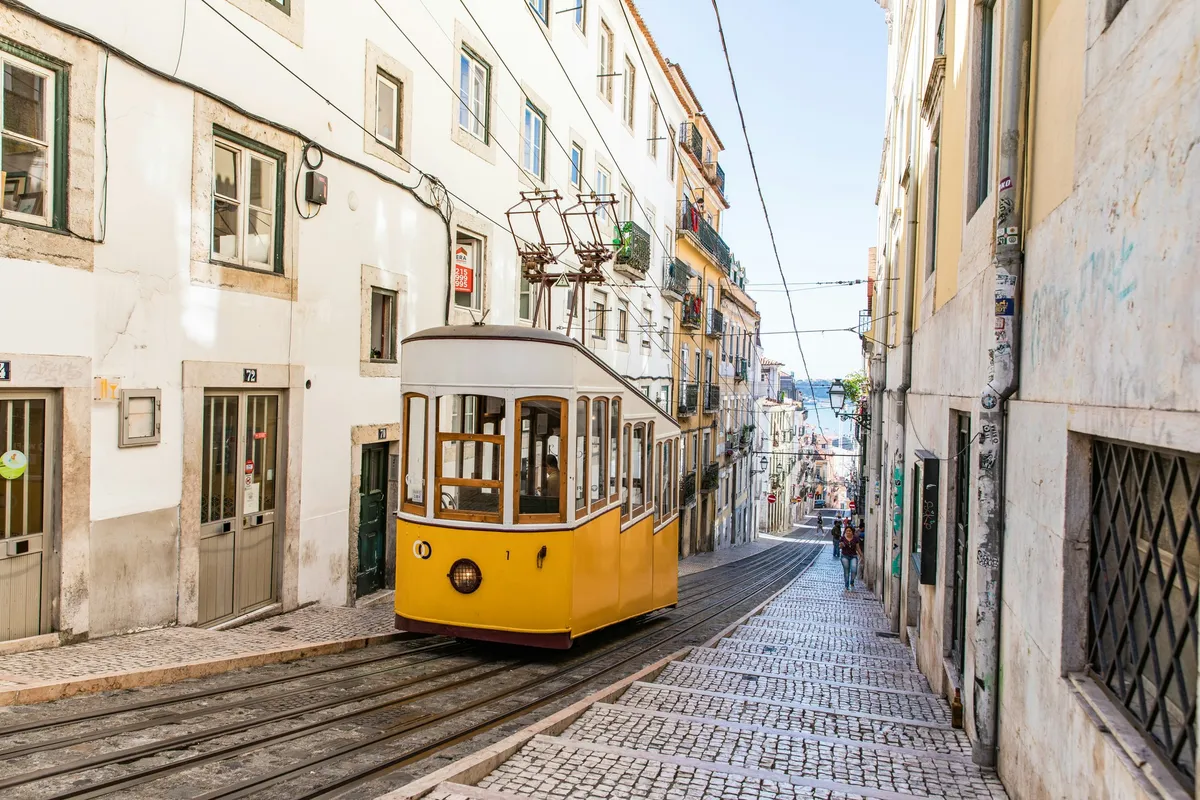
A first visit to Lisbon often collides with physical geography. The city spreads over steep ridge lines of calcified limestone, where a 600-meter straight line on a flat digital map easily translates into a grueling 50-meter vertical climb over slick paving stones. Trying to cram every hilltop district, suburban palace, and historic tram into a hurried 72-hour break usually leads to missed timed entries, dead time spent standing in tram queues, and sore joints. Planning three days in Lisbon: a realistic first-trip itinerary requires respecting the city's topography, understanding transit pricing structures, and grouping sights by altitude and rail lines rather than popularity.
Over my years walking these neighborhoods and testing local transit routes, I have watched countless travelers waste half a morning waiting for congested streetcars or trying to sprint uphill between disjointed monuments. The secret to a smooth stay is pacing: tackling the central historic core on foot with smart elevator shortcuts on Day 1, taking fast suburban rail down the Tagus river to the Belém monument cluster on Day 2, and dedicating Day 3 to the Serra de Sintra or the Atlantic coastline. Setting sensible daily routes keeps you moving forward instead of retracing exhausting paths back and forth across the hills.
Transit Fares, Passes, and Pre-Arrival Logistics for Three Days in Lisbon
Navegante, Zapping, and Contactless: Calculating 2026 Transit Costs
Lisbon’s ticketing system runs on the rechargeable Navegante occasional card, a rigid green paper card that costs €0.50 at automated station kiosks. The most cost-effective and flexible way to use this card is preloading stored pay-as-you-go credit known as Zapping. In 2026, a standard single journey on the Carris bus and tram network or the Metropolitano de Lisboa costs €1.90 when loaded as an individual ride ticket, whereas paying directly at Metro fare gates using a contactless bank card or smart device costs €1.92 per trip. Loading Zapping credit drops that same Carris or Metro journey to €1.72.
Zapping also delivers significant savings on suburban rail. When traveling on Comboios de Portugal (CP) commuter trains out to Sintra or Cascais, a dedicated Zapping train fare of €2.05 is deducted at the station turnstiles, compared to €2.55 for a standalone suburban paper train ticket. Kiosks require a minimum automated top-up of €3.00 and accept balances up to €40.00. Because stored Zapping balances cannot be transferred between paper cards or refunded at the end of your trip, loading €15.00 on your first day covers urban transit and day-trip rail without stranding excess funds.
| Ticket Option | Cost in 2026 | Coverage Scope | Best Practical Scenario |
|---|---|---|---|
| Navegante Paper Card | €0.50 | Required reusable physical card base | Mandatory initial transit purchase |
| Metro Contactless Open-Loop | €1.92 per tap | Metropolitano de Lisboa gates only | Single ad-hoc rides without buying a card |
| Single Carris / Metro Ticket | €1.90 | Carris buses, trams, and Metro lines | Isolated rides loaded onto Navegante card |
| Zapping Stored Credit | €1.72 Carris/Metro, €2.05 CP | Metro, Carris, CP trains, Transtejo ferries | Default choice for flexible 72-hour routes |
| 24-Hour Carris / Metro Pass | €7.25 | Unlimited Carris and Metro (includes Santa Justa) | Days with 4+ urban rides and funiculars |
| 24-Hour Carris / Metro / CP Pass | €11.40 | Urban transit plus Sintra and Cascais rail | Intensive day trips returning to city transit |
Official schedules, network maps, and the full pricing index are detailed on the Carris prices table and the Metropolitano de Lisboa ticket portal. When choosing where to stay before arriving, pick an area connected to a direct transit artery; my breakdown on where to stay in Lisbon: choosing the right neighbourhood outlines which central districts keep you close to Metro lines without forcing you to haul luggage up sheer staircases.
Lisboa Card vs. Pay-As-You-Go: Which Sightseeing Pass Makes Sense?
The Lisboa Card sightseeing pass bundles unlimited city public transit, suburban CP trains to Sintra and Cascais, and free or discounted admission to designated historical monuments. In 2026, the pass costs €31.00 for 24 hours, €51.00 for 48 hours, and €62.00 for 72 hours for an adult. Deciding whether the pass is worthwhile is a matter of basic arithmetic based on your daily sightseeing density rather than general travel advice.
A 24-hour pass pays for itself if you concentrate heavy entry fees on Day 2 in Belém. Combining admission to the Jerónimos Monastery cloister (€18.00) and Belém Tower (€15.00) with suburban CP train rides (€4.10 return) totals €37.10 in standalone expenses, producing an immediate net saving of €6.10 against the €31.00 pass. Conversely, the 72-hour pass (€62.00) frequently produces a net loss of €10.00 to €15.00 for travelers following a balanced pace. Castelo de São Jorge (€17.00) is excluded from the pass entirely, while Sintra's major monuments—Palácio Nacional da Pena and Quinta da Regaleira—offer modest discounts of only 10% to 20% rather than free admission.
Purchase the 24-hour Lisboa Card (€31.00) strictly for Day 2 to cover the Belém monument cluster and commuter trains. For Day 1 and Day 3, rely on Navegante Zapping credit to avoid paying for museum inclusions you will not have time to visit.
Mandatory Validations, Municipal Taxes, and Enforcement Rules
Every passenger must possess an individual Navegante card. Lisbon's electronic ticketing infrastructure does not support multiple validations or group travel on a single card; tapping a card twice at a gate immediately returns an error. You must scan your card or contactless device upon entering every bus, tram, funicular, and metro station gate until the green indicator light flashes and the gate chime sounds. On suburban CP trains, tap your card at the platform validation totems before stepping onto the carriage.
Under Portuguese Law 28/2006 (amended by Decree-Law 117/2017), riding Carris and Metro lines without a valid ticket or failing to validate carries statutory fines between €120.00 and €350.00, reduced by 50% if paid voluntarily within 15 working days.
If you choose open-loop contactless payment at Metro gates, you must tap the exact same physical card or device on both entry and exit turnstiles. Tapping a smartphone on entry and a smartwatch or physical plastic card linked to the same account on exit registers as two open journeys, triggering the maximum default network fare on both transactions. Additionally, budget for the municipal tourist tax (*taxa municipal turística*) upon hotel or guesthouse check-in: Lisbon levies €4.00 per guest per night for visitors aged 13 and older, capped at a maximum of 7 consecutive nights (€28.00) per stay.
Day 1: Historic Core, Hilltop Miradouros, and Alfama
Morning in Baixa and Chiado: Plazas, Convent Ruins, and Santa Justa Bypass
Begin your first morning on the riverfront at Praça do Comércio, Lisbon’s grand waterfront plaza rebuilt in a strict grid after the 1755 earthquake. Walk north through the Rua Augusta Arch into the pedestrianized shopping corridor of Baixa. The walk from the river edge along Rua Augusta up to Rossio Square (Praça Dom Pedro IV) takes roughly 10 minutes along flat mosaic paving. From Rossio, head southwest up the incline toward Largo do Carmo; this 1.1-kilometer walking link covers roughly 45 vertical meters and takes between 15 and 20 minutes at a steady pace.
At the crest of the hill stand the open-air Carmo Convent ruins (Igreja do Carmo), whose roofless Gothic nave collapsed during the 1755 earthquake and remains standing as a permanent historical monument. Standard adult admission to the Carmo Archaeological Museum inside the nave is €7.00, with a discounted rate of €5.00 available for students, visitors aged 65 and older, and Lisboa Card holders. The quiet, sunlit interior takes about 45 minutes to inspect.
Directly behind the Carmo Convent ruins lies an elevated pedestrian footbridge (*passadiço*) connecting the Chiado hill to the upper platform of the Santa Justa Lift (Elevador de Santa Justa). By approaching this walkway on foot from Largo do Carmo, you step onto the viewing terrace looking out across the Baixa rooftops completely free of charge. You avoid both the slow street queue below and the €6.20 onboard round-trip ticket fare. The separate narrow spiral staircase leading to the topmost circular observation deck costs €1.50 at the small turnstile, but the open footbridge itself provides an identical orientation across the valley.
Afternoon at Castelo de São Jorge and the Alfama Miradouros
To reach the historic castle district on the opposite eastern ridge without wearing out your legs on the steep asphalt, use the city's hidden public elevator network. Walk down into Baixa to Rua dos Fanqueiros 170/178 and take the public lift inside the building up to Rua da Madalena. Step across the road and enter the Chão do Loureiro market parking complex, where a second free public elevator lifts you directly onto Costa do Castelo. This combined bypass saves approximately 40 to 45 vertical meters of climbing.
At Castelo de São Jorge, tickets cost €17.00 for adults and €8.50 for youths aged 13 to 25. Purchase your admission beforehand through BOL (Bilheteira Online), the official digital sales portal, to scan straight through the turnstiles and bypass the physical ticket line. Inside, walk along the fortified stone battlements for expansive views stretching from the Vasco da Gama Bridge down to the 25 de Abril suspension span.
After leaving the castle gates, descend through the Alfama miradouros along the tram corridor. Miradouro de Santa Luzia offers a shaded terrace surrounded by bougainvillea and blue-and-white tiled panels depicting Lisbon before the earthquake. Just two minutes further down the street, Miradouro das Portas do Sol provides an open panoramic overlook across the red terracotta roofs of Alfama down to the cruise docks. If you still have energy in the late afternoon, tackle the steep 14% to 16% gradient up Calçada de Santo André to Miradouro da Senhora do Monte. As Lisbon's highest viewing point, the stone balustrade fills up early; arriving at least 45 minutes before sunset guarantees a secure spot along the wall.
Evening Logistics: Tram 28E Realities and a Traditional Fado Dinner
The iconic yellow streetcars on the Tram 28E route pass directly through the upper districts of Alfama and Graça. However, treating Tram 28E as practical evening transit often leads to frustration. At the Martim Moniz terminus, passenger queues regularly stretch to 60 or 90 minutes during peak hours, and boarding passengers are packed shoulder-to-shoulder inside the historic wooden carriages. Organized pickpocket syndicates operate actively across this route, taking advantage of sharp turns and sudden braking to lift wallets from unzipped bags. An onboard cash ticket purchased from the driver costs €3.30, compared to €1.72 deducted via Zapping.
Instead of queuing for the streetcar, walk downhill through the narrow alleys of Alfama for an authentic evening meal. Look for small, family-run neighborhood *tascas* featuring *fado vadio* (informal amateur fado) rather than large commercial dinner halls. Traditional venues typically charge no formal entrance fee but apply an artist cover charge or minimum consumption (*consumo mínimo*) of €15.00 to €25.00 per person, while formal fado houses charge fixed multi-course menus ranging from €40.00 to €70.00.
When you sit down, waitstaff routinely place bread, butter, olives, and regional cheese (*couvert*) on your table unprompted. These items are not complimentary; consuming them adds €5.00 to €10.00 to your final restaurant bill. If you do not want them, clearly decline them before taking a bite, and the server will remove them without issue.
Day 2: Belém Waterfront, Jerónimos Monastery, and Time Out Market
Reaching Belém: Beating Tram 15E Crowds with Fast CP Rail and Buses
Belém sits approximately 6 kilometers west of central Lisbon along the river mouth. The standard advice in generic guides is taking Tram 15E from Praça da Figueira or Praça do Comércio. In practice, Tram 15E suffers from extreme overcrowding, slow stop-and-go traffic along Avenida 24 de Julho, and heavy pickpocket activity. The journey on Tram 15E takes between 35 and 45 minutes, almost all of it spent standing.
A faster and more comfortable transit method is the suburban CP train departing from the Cais do Sodré train terminal on the Cascais suburban line. Commuter trains run every 12 to 20 minutes, reaching Belém station in precisely 7 minutes. The journey is included free with the Lisboa Card, or costs €2.05 deducted via Zapping credit. Alternatively, Carris express bus lines 728 and 714 leave from central hubs and reach Belém in roughly 20 to 25 minutes, providing air conditioning and dedicated bus-lane routing that runs circles around the streetcar.
Mosteiro dos Jerónimos, Pastéis de Belém, and Waterfront Landmarks
Mosteiro dos Jerónimos is a standout example of Manueline architecture, characterized by elaborate maritime stonework carved during Portugal's Age of Discovery. General admission to the two-story cloister costs €18.00 through the official Museus e Monumentos de Portugal ticketing office. Booking an advance timed-entry slot online is mandatory. Cloister visitors enter via a dedicated line on the left side of the entrance portal.
Do not wait in the long ticket line on the plaza if you only want to see the royal tombs. Access to the nave of the Church of Santa Maria de Belém—housing the stone sarcophagi of explorer Vasco da Gama and poet Luís de Camões—is entirely free, managed via a separate queue to the right of the main doors.
A two-minute walk east of the monastery stands the historic bakery Pastéis de Belém, baking egg custard tarts based on the original 1837 recipe from the monastery monks. The exterior queue out on the pavement often looks daunting, but it is almost entirely composed of tourists waiting for takeaway boxes. Walk straight past this line through the main entrance into the labyrinth of interconnected interior dining rooms; seating capacity exceeds 300 seats, and tables turn over quickly for seated orders sprinkled with cinnamon and powdered sugar.
After breakfast, cross the railway tracks via the underground pedestrian passage to explore the flat Belém waterfront along a continuous 1.5-kilometer paved promenade. Head first to Padrão dos Descobrimentos, the imposing 52-meter limestone monument honoring Portuguese navigators. Access to the rooftop observation deck and lower exhibition hall costs €10.00 for adults (€5.00 for youths aged 13 to 25). Continue 10 minutes west along the seawall to the 16th-century fortress Torre de Belém, which requires a timed entry ticket costing €15.00 through Museus e Monumentos de Portugal. Due to strict occupancy limits inside the narrow spiral staircases of the tower, arrive precisely at the start of your reserved entry slot.
Evening: Dinner at Time Out Market and Bairro Alto Nightlife
Board the return CP suburban train from Belém station back to Cais do Sodré (7 minutes). Directly across from the station entrance stands Time Out Market (Mercado da Ribeira), a bustling food hall housing over 30 restaurant stalls run by prominent local chefs under one historic iron roof structure. Expect a bustling, high-volume environment where finding seats at the shared wooden tables between 19:30 and 21:30 requires patience. A main dish and a drink typically range between €16.00 and €28.00 per person. If the central hall is packed, explore traditional tascas along the neighboring streets of Rua de São Paulo and Rua das Flores for a calmer meal.
From Cais do Sodré, walk north up Rua do Alecrim into Bairro Alto; the short climb takes 12 to 15 minutes and covers an elevation gain of roughly 50 meters. Bairro Alto’s nightlife is defined by open-air street socializing rather than indoor clubs. Small bars serve caipirinhas and draft beer (*imperiais*) in plastic cups, with crowds spilling out to socialize across the narrow cobblestone lanes until late at night.
Day 3: Sintra Day Trip Itinerary (or Cascais Coastal Alternative)
Planning the Rail Excursion: CP Trains, Strike Bulletins, and Card Deductions
The Sintra day trip itinerary is the standard day excursion from Lisbon, located 30 kilometers northwest in the cool, forested Serra de Sintra hills. Suburban trains depart from Lisbon Rossio station directly to Sintra station every 20 minutes on weekdays and every 30 minutes on weekends, with a journey time of 40 minutes. Train travel is fully covered by the Lisboa Card; travelers using Navegante cards with Zapping pay €2.05 per journey deducted at the platform gates.
Before heading to Rossio station, you should review operational advisories. Portuguese rail unions periodically stage strikes that severely reduce regional operations. Check the official strike alerts (*avisos de greve*) on the Comboios de Portugal website the evening before. When industrial action occurs, legally mandated minimum service levels (*serviços mínimos*) frequently reduce train schedules to only 20% to 25% of standard capacity, producing massive bottlenecks at Rossio. On strike dates, swap your plans immediately in favor of a local Lisbon walking day.
Palácio Nacional da Pena and Quinta da Regaleira: Slot Management and Transit Access
To navigate Sintra efficiently, take the train from Rossio no later than 07:40 to reach Sintra station by 08:20. The mountain road (Estrada da Pena) leading up the cliffs to the palaces is legally closed to private cars. Visitors must rely on the dedicated circular Scotturb bus 434, licensed taxis, or steep hiking trails. A 24-hour hop-on hop-off pass on Scotturb 434 costs €13.50 at the station kiosk, while a single one-way climb costs €4.55. Taxis and app rideshares operate on the route, but morning traffic jams can cause substantial delays.
Palácio Nacional da Pena operates a zero-tolerance policy for interior stateroom entries. The timestamp on your ticket booked through Parques de Sintra applies specifically to the palace doorway, not the outer park gates. The uphill walk from the main gate to the palace entrance takes roughly 30 minutes. If you miss your allocated slot by even one minute, entry is denied without refund or modification.
After touring the vibrant yellow and red terraces of Pena, take Scotturb bus 434 down into Sintra's historic town center to visit Quinta da Regaleira, an eccentric neo-Manueline estate known for underground tunnels and Gothic grottos. Purchase admission through the official vendor MEO Blueticket (€20.00 adult). Regaleira provides a flexible entry window allowing entry up to one hour past your reserved slot.
Once past the turnstiles, walk straight to the Initiation Well (*Poço Iniciático*), a 27-meter subterranean spiral well framed by stone arches. Queues to descend the spiral staircase regularly back up to 20 to 40 minutes between 11:30 and 14:30. Exploring the well right away lets you experience the tunnels before the midday tourist rush fills the estate.
Returning to Sintra station by mid-afternoon requires careful transport management. Between 16:30 and 18:30, local rideshare applications frequently apply surge multipliers of 1.8x to 2.5x due to heavy congestion along the narrow mountain roads. Avoid waiting for ride-hailing services in gridlock; walk downhill from Quinta da Regaleira to Sintra station in 15 to 20 minutes and board the direct CP commuter train back to Rossio.
Cascais Coastal Promenade: The Alternate Low-Stress Day Route
If the Serra de Sintra is cloaked in dense mountain fog or you want an unhurried, flat walking day without timed entry slots, divert to the coastal town of Cascais. Suburban trains depart every 12 to 20 minutes from Lisbon’s Cais do Sodré station along the Linha de Cascais, tracing the coastline for 33 to 37 minutes (€2.05 via Zapping or included with the Lisboa Card).
For the best walking approach, get off three stops early at Estoril station. From the station exit, step directly onto the Cascais coastal promenade (*Paredão de Cascais*), a paved seawall walkway stretching 2.75 kilometers flat alongside Atlantic beaches and open-air cafes into the town center of Cascais. Once in the historic center, stroll through the paved shopping lanes to Boca do Inferno, a coastal chasm where Atlantic swells crash against hollowed sea caves. Return to Lisbon on the train whenever you like, completely free of the strict ticket windows that dominate Sintra.
Essential Practicalities: Footwear, Terrain, Safety, and Ticket Booking Pitfalls
Navigating Calçada Portuguesa Cobblestones and Lisbon Steep Inclines
Lisbon’s traditional street paving, known as *calçada portuguesa*, consists of small, hand-cut cubes of white limestone and black basalt laid in decorative mosaic patterns. Over decades of foot traffic, the limestone cubes become polished down to a glossy, glass-like smoothness. When damp from morning dew, cleaning water, or Atlantic rain showers, these stones provide virtually no friction.
Do not wear smooth-soled dress shoes, un-grooved lifestyle sneakers, or thin heels on Lisbon’s streets. Choose supportive footwear featuring deep rubber lug patterns to maintain traction on steep marble inclines.
To reduce joint fatigue while exploring, take advantage of the free public lifts and municipal escalator networks integrated into the urban fabric:
- Elevador do Castelo: Links Rua dos Fanqueiros to Rua da Madalena and Costa do Castelo, bypassing 40 to 45 vertical meters of steep uphill walking.
- Baixa-Chiado Metro Escalator Spine: Connects the lower Baixa station gates directly to Largo do Chiado, eliminating a steep climb up the hillside.
- Mouraria Public Escalators: Located near Martim Moniz metro, offering an effortless vertical link toward the castle's northern slopes.
- Elevador de Santa Luzia: A quiet lift linking the lower lanes of Alfama directly to the Santa Luzia viewing terrace.
Advance Ticketing Portals, Timed Slots, and the 'Acesso 52' Non-Resident Trap
An ongoing travel myth circulating on social media claims that Portuguese national museums offer free admission on Sunday mornings. Under the reformed Portuguese *Acesso 52* program, free admission to national monuments for up to 52 days per calendar year is legally restricted to Portuguese citizens and permanent tax residents holding a Portuguese Citizen Card (*Cartão de Cidadão*) or tax number (NIF). International non-resident tourists must hold paid tickets every day of the week, with gate staff verifying residency at the turnstiles.
Always book monument admissions through authorized state ticketing providers rather than third-party reseller portals that inflate baseline fees with hidden surcharges. Use this verified directory for online bookings:
- Castelo de São Jorge (€17.00): BOL (Bilheteira Online — bol.pt)
- Mosteiro dos Jerónimos Cloister (€18.00): Museus e Monumentos de Portugal (museusemonumentos.pt)
- Torre de Belém (€15.00): Museus e Monumentos de Portugal (museusemonumentos.pt)
- Padrão dos Descobrimentos Viewpoint (€10.00): Official monument desk (padraodosdescobrimentos.pt)
- Palácio Nacional da Pena (€20.00 Palace & Park): Parques de Sintra (parquesdesintra.pt)
- Quinta da Regaleira (€20.00): MEO Blueticket (blueticket.meo.pt)
Final Verdict: Budget and Route Blueprint for Three Days in Lisbon
Total Cost Breakdown: Strict Budget vs. Lisboa Card Flexibility
Balancing transit and attraction costs across 72 hours depends on your touring style. Here is a clear baseline calculation comparing pay-as-you-go Zapping against the 72-hour Lisboa Card for one adult following this itinerary (excluding food and accommodation):
| Expense Item | Strategy A: Pay-As-You-Go + Zapping | Strategy B: 72-Hour Lisboa Card |
|---|---|---|
| Transit Base / Card Fee | €0.50 card + €15.00 Zapping credit | €62.00 (covers all city transit & CP rail) |
| Castelo de São Jorge | €17.00 | €17.00 (no pass discount) |
| Jerónimos Monastery Cloister | €18.00 | €0.00 (included in pass) |
| Torre de Belém | €0.00 (exterior view) | €0.00 (included in pass) |
| Pena Palace (Palace & Park) | €20.00 | €18.00 (10% pass discount applied) |
| Quinta da Regaleira | €20.00 | €16.00 (20% pass discount applied) |
| Lisbon Municipal Tourist Tax | €12.00 (3 nights @ €4.00/night) | €12.00 (3 nights @ €4.00/night) |
| Total Mandatory Baseline | €102.50 | €125.00 |
Strategy A saves €22.50 per person while liberating you from feeling forced to tick off extra museums simply to break even on an expensive all-inclusive card. The pay-as-you-go method aligns naturally with a realistic, low-stress itinerary.
Execution Rules: Time Buffers, Weather Contingencies, and Route Priority
To execute this three-day route without logistical breakdowns, stick to four operational rules:
- The 45-Minute Buffer Rule: Arrive at the outer estate gates of Pena Palace and Mosteiro dos Jerónimos at least 45 minutes ahead of your reserved entry slot to account for ticket checks and uphill walking corridors.
- The Microclimate Check: The Serra de Sintra forms its own mountain microclimate, holding dense Atlantic clouds and cold drizzle even when central Lisbon is bathed in sunshine. Check morning live webcams; if Sintra's peaks are covered in fog, swap Day 2 (Belém) with Day 3, or redirect your rail excursion to sunny Cascais.
- The Peak Transit Bypass: Board historic trams like the 28E before 08:30 or skip riding them entirely. Rely on walking, public elevators, and suburban CP commuter trains to avoid standing in long lines.
- The Sintra Surge Warning: Avoid waiting for Uber or Bolt rides in Sintra between 16:30 and 18:30, when vehicle shortages drive algorithmic surge pricing up by 1.8x to 2.5x. Walk 15 minutes down to Sintra station and take the direct commuter train back to Rossio.