
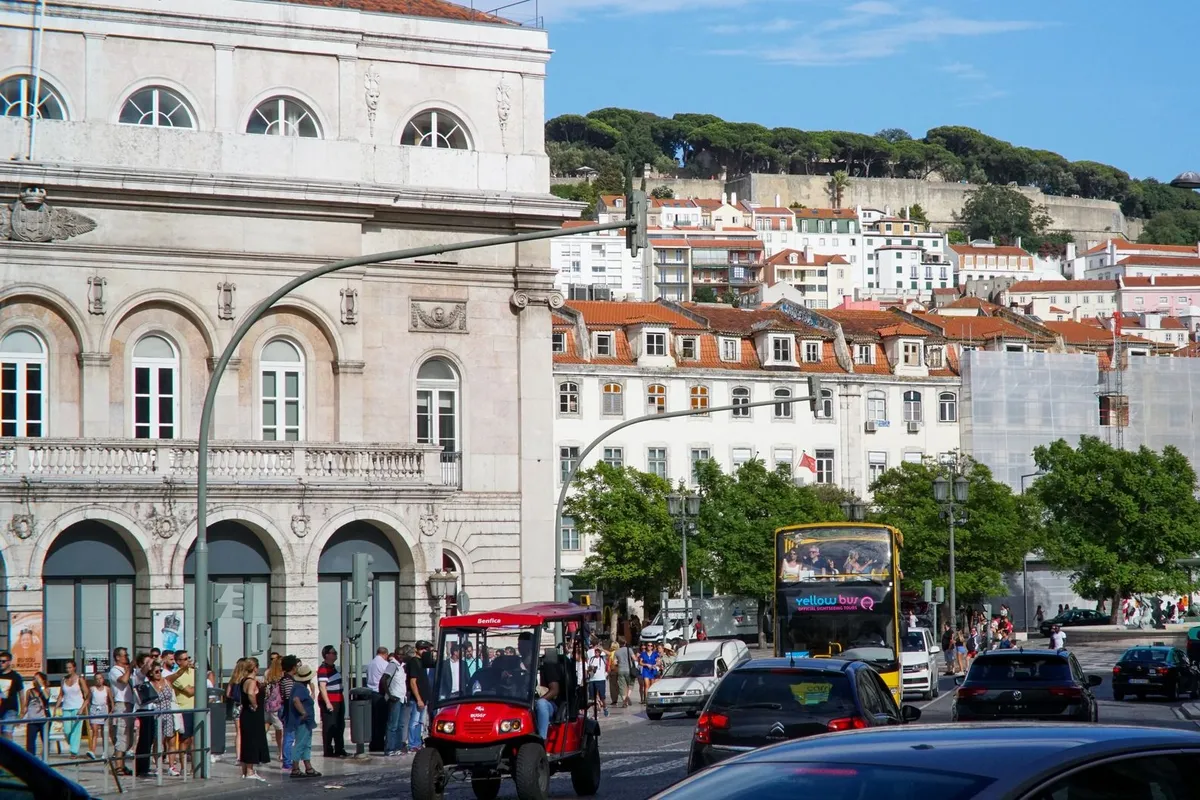
Finding an efficient way to navigate Lisbon’s steep topography often leads travelers to Yellow Bus Tours Lisbon, the municipal sightseeing service operated by Carristur. A standard 48-hour combo ticket for the open-top bus circuits costs €28.00, providing an accessible overview of the capital’s scattered monuments from Praça dos Restauradores out to Belém and Parque das Nações. When I walk past the departure terminals along the waterfront, I regularly observe first-time visitors struggling with rigid 40-minute bus intervals and confusing ticket inclusions. Understanding how these routes function alongside the municipal transit system is essential before deciding whether to spend your travel budget on a commercial tour pass.
Choosing between a dedicated sightseeing pass and standard municipal public transit comes down to your personal sightseeing pace and route priorities. The service pairs double-decker bus routes with vintage tram loops and Tagus River cruises, but Lisbon’s relentless traffic bottlenecks frequently disrupt theoretical timetables. This practical analysis outlines route networks, verified 2026 pricing, transit interchanges, and the ground-level limitations of exploring the city aboard yellow bus lisbon tickets.
Central Departure Hubs and How to Reach Yellow Bus Tours Lisbon
Main Departure Points: Praça dos Restauradores, Praça do Comércio, and Sul e Sueste Terminal
Yellow Bus Tours operates its core network from three distinct waterfront and downtown transit hubs. The primary terminal for open-top double-decker buses is located at Praça dos Restauradores, positioned directly in front of the historic Palácio Foz. This central square serves as the dual origin and interchange terminal for both the Belém Lisbon Tour and the Modern Lisbon Tour. Passengers boarding here can access ticket kiosks and physical departure bays marked with Carristur signage.
The operator’s historical vintage tram services depart from a dedicated transit island at Praça do Comércio, situated on the northern perimeter of the expansive plaza facing the Baixa grid. Both the Hills Tramcar Tour and the Royal & Legacy Tramcar Tour load passengers from this specific stop rather than the mixed-use municipal tram stops along the street edge. Walking across the open plaza from the archway takes approximately two minutes.
River excursions depart exclusively from the riverbank at Terreiro do Paço. The Tagus River Yellow Boat docks at the Estação Fluvial Sul e Sueste, utilizing Gate B inside the modernized terminal concourse. Reaching each hub by underground transit is straightforward: take the Lisbon Metro Blue Line directly to Restauradores station (using the exit marked for Praça dos Restauradores and Rua 1º de Dezembro), or ride the Blue Line to Terreiro do Paço station, which features a direct pedestrian underpass leading to the Sul e Sueste river terminal concourse.
Transit Connections, Walking Routes, and Parking Logistics
Connecting between regional rail lines and the central departure plazas requires minimal walking. Travelers arriving on the suburban commuter train from Sintra at Rossio Central Railway Station can exit the main hall onto Rua 1º de Dezembro; the bus terminal at Praça dos Restauradores is roughly 150 meters away, taking under two minutes on foot. If you are arriving from Cascais or Estoril at the Cais do Sodré rail hub, you can walk eastward along the river promenade for roughly 12 minutes to reach Terreiro do Paço, or take the green metro line one stop to Baixa-Chiado and descend through the hillside.
Pedestrian transfers between Praça da Figueira and the bus terminal at Praça dos Restauradores measure roughly 350 meters, requiring a four-minute walk along Rua Dom Antão de Almada. When planning transit connections, keep in mind that while your sightseeing pass includes unlimited rides on regular Carris public trams, standard municipal buses (autocarros) and the underground Metro network are strictly excluded from all Yellow Bus passes.
I strongly advise against driving a personal or rental car into the Baixa and Restauradores districts due to severe traffic restrictions, narrow bus corridors, and strict municipal camera enforcement. If you must arrive by car, the underground Parque Restauradores operated by Telpark offers parking directly beneath the square, though daytime rates run between €2.80 and €3.40 per hour and spaces fill quickly on weekday mornings.
Transfer Strategy: If you plan to switch between the panoramic buses at Praça dos Restauradores and the historical trams at Praça do Comércio, do not wait for a connecting bus. Walking straight down the flat pedestrian corridor of Rua Augusta takes roughly 10 minutes and avoids downtown traffic queues.
Lisbon Hop On Hop Off Bus and Tram Itineraries: Routes and Stops
Circuit Breakdown: Yellow Bus Belém Tour and Modern Lisbon Route
The double-decker bus network is split into two extensive circuits that showcase completely different eras of Portuguese urban planning. The yellow bus belem tour traces the historic western corridor along the Tagus estuary, departing from Praça dos Restauradores every 40 minutes between 09:00 and 19:00. A continuous loop without disembarking takes approximately 1 hour and 50 minutes under standard traffic conditions.
From the central hub, the Belém route climbs past Marquês de Pombal and Amoreiras before descending past the Estrela Basilica toward the riverfront at Alcântara. The bus stops near the Jerónimos Monastery, proceeds past the iconic Belém Tower, and stops at Padrão dos Descobrimentos (Stop 12) before returning via the museum belt and Avenida 24 de Julho. You can inspect complete stop listings and route maps on the official Carristur Belém and Modern Lisbon Bus Tour page.
The Modern Lisbon Tour heads northeast toward the former Expo 98 site, running daily between 09:20 and 18:00 with the same 40-minute departure frequency. Completing this entire loop also requires 1 hour and 50 minutes. The bus rolls past Santa Apolónia rail station and the Museu Nacional do Azulejo before entering the futuristic waterfront of Parque das Nações, stopping near the Vasco da Gama Shopping Mall (Stop 11) and the renowned Oceanário de Lisboa.
| Circuit Name | Starting Terminal | Key Landmark Stops | Loop Duration | Operating Hours | Frequency |
|---|---|---|---|---|---|
| Belém Lisbon Tour | Praça dos Restauradores | Estrela Basilica, Jerónimos, Belém Tower, Padrão dos Descobrimentos | 1h 50m | 09:00–19:00 | Every 40 min |
| Modern Lisbon Tour | Praça dos Restauradores | Santa Apolónia, Tile Museum, Oceanário, Parque das Nações | 1h 50m | 09:20–18:00 | Every 40 min |
Headway Notice: The 40-minute headway between buses is substantial. If you step off to inspect a monument or grab a coffee, missing your targeted return bus means spending at least 40 minutes waiting curbside without shelter.
Vintage Tram Lines and the Tagus River Yellow Boat Itinerary
Beyond panoramic buses, Carristur operates historical rail circuits that allow travelers to navigate the older districts without battling the notorious queues of public transit. The hills tramcar tour lisbon takes passengers on a 1-hour and 45-minute journey through the medieval alleyways of Alfama, Mouraria, Graça, and Chiado, before looping past the Estrela Basilica. Boarding takes place at Praça do Comércio, and the route winds past scenic overlooks including the Portas do Sol viewpoint and Santa Luzia.
The vintage Hills Tramcar serves as a practical alternative to the regular public Tram 28 route. While public tram 28E is perpetually packed with standing commuters and poses persistent pickpocket risks, the tourist tram provides guaranteed individual seating and pre-recorded historical commentary. Detailed ticketing options for these vintage lines are cataloged on the Carristur Tram Tours portal.
The river experience is provided by the Tagus River Yellow Boat, a hop-on hop-off river shuttle completing a circuit of 1.5 to 2 hours between Terreiro do Paço (Sul e Sueste) and the Belém dock near the MAAT museum. It is important to clarify that this tourist boat does not stop at Cacilhas on the southern bank; passengers seeking the Almada side must use regular Transtejo municipal commuter ferries. Note that on Tuesdays, Thursdays, and Sundays, this river service is operated by a partner vessel that sails directly without stopping in Belém and lacks recorded audio commentary.
Vehicle Fleet Setup, Audio Guide Systems, and Accessibility Differences
The double-decker fleet consists of open-top buses designed with two distinct passenger environments. The upper deck features open-air perimeter seating that offers unobstructed photographic angles of Lisbon’s architecture, though it lacks roof protection against intense sun or passing rain showers. The lower deck is fully enclosed, climate-controlled with standard ventilation, and provides step-free boarding access via a certified fold-out wheelchair ramp at the front passenger doors.
The vintage rail fleet consists of traditional 1930s-era Remodelado tramcars finished with polished wood paneling, brass grab rails, and manual drop-down sash windows for natural cross-ventilation. Because these historic streetcars feature three narrow, steep wooden boarding steps, they cannot accommodate unfolded wheelchairs, motorized mobility scooters, or large wheeled luggage.
Every passenger boarding an open-top bus or vintage tram is provided with a pair of disposable wired 3.5 mm earphones. Seatback audio units deliver pre-recorded multilingual audio guide commentary in 12 languages, including English, Portuguese, Spanish, French, German, Italian, and Mandarin. While the audio track synchronizes via GPS to highlight passing landmarks, heavy urban congestion occasionally causes narrations to trigger slightly out of alignment with the vehicle’s physical position.
Keep in mind that while your tour ticket includes free boarding on public Carris yellow streetcars (routes 12E, 15E, 18E, 24E, 25E, and 28E), it does not cover the historical street funiculars (Glória, Bica, Lavra, Graça) or the Elevador de Santa Justa vertical lift.
Yellow Bus Lisbon Tickets, Passes, and Cost-to-Value Breakdown
Ticket Tiers and Current Fares: 24-Hour Passes to 96-Hour Combos
Yellow Bus structures its pricing around consecutive hourly validation windows. The entry-level option for road sightseeing is the 48-hour Belém and Modern Lisbon Bus Tour combo ticket, priced at €28.00 for adults aged 17 and older, and €21.00 for youth aged 11 to 16. Children aged 3 and under travel free of charge across all routes, provided they sit on an accompanying adult’s lap.
Travelers who want vintage streetcar access alongside open-top buses can purchase the 48-hour Bus and Tram combo pass for €38.00 (youth fare €28.50). This pass covers both bus loops, the Hills Tramcar Tour, and the Royal & Legacy Tramcar Tour. If you want Tagus River boat access included, the comprehensive Lisbon All-in-One Pass is available in two durations: a 72-hour pass costing €47.00 for adults (€35.00 youth) or an extended 96-hour pass priced at €57.00 for adults (€42.50 youth), verified via the official Carristur All-in-One Pass page.
Carristur also retails a standalone 24-hour ticket for the historical vintage Hills Tramcar Tour at €25.00 for adults and €19.00 for youth. From a cost-to-value perspective, this standalone tram ticket is poor value; paying just €13.00 more upgrades you to the 48-hour Bus and Tram combo, doubling your validity window and adding two comprehensive double-decker bus routes across the city.
| Ticket Tier | Validity | Adult Fare (17+) | Youth Fare (11–16) | Child (0–3) | Included Services |
|---|---|---|---|---|---|
| Belém + Modern Bus Tour | 48 Hours | €28.00 | €21.00 | Free (on lap) | 2 bus routes, Carris trams, Carris Museum |
| Hills Tramcar Tour (Standalone) | 24 Hours | €25.00 | €19.00 | Free (on lap) | Hills Tramcar, Carris trams, Carris Museum |
| Bus & Tram Combo | 48 Hours | €38.00 | €28.50 | Free (on lap) | 2 bus routes, 2 vintage trams, Carris trams, Carris Museum |
| Lisbon All-in-One Pass (72h) | 72 Hours | €47.00 | €35.00 | Free (on lap) | 2 buses, 2 trams, Yellow Boat, Carris trams, Carris Museum |
| Lisbon All-in-One Pass (96h) | 96 Hours | €57.00 | €42.50 | Free (on lap) | 2 buses, 2 trams, Yellow Boat, Carris trams, Carris Museum |
Complimentary Perks: Carris Public Trams and Museu da Carris
A notable benefit built into all Yellow Bus sightseeing passes is unlimited free access to the regular yellow Carris street trams across the capital throughout your ticket’s active validity window. This includes high-demand public lines such as the 15E tram to Belém, the scenic 28E through the old quarters, and lines 12E, 18E, 24E, and 25E. Given that purchasing a single tram ticket on board from a Carris driver costs €3.30 in cash, using your pass to hop onto public streetcars yields immediate savings.
Pass holders also receive complimentary general admission to the Carris Transportation Museum (Museu da Carris), located at the historic tram depot on Rua 1º de Maio in the Alcântara neighborhood. Standard entry normally costs €5.50. The museum houses an impressive collection of 19th-century horse-drawn carriages, early electric tramcars, and municipal transit machinery.
During a museum visit, passengers can ride a dedicated internal heritage tram shuttle that links the ticket concourse to the rolling-stock restoration warehouses. I suggest allocating roughly 1 to 1.5 hours to tour the exhibits comfortably. Note once again that regular Carris municipal buses and the Metropolitano de Lisboa subway system are not covered by this promotional perk.
Validation Rules, Mobile Check-In, and Non-Refundable Terms
Ticket validity operates on a strict continuous hourly countdown rather than calendar days. If you first scan a 48-hour pass at 14:15 on a Tuesday, your pass remains valid for boarding until exactly 14:14 on Thursday afternoon. This consecutive hourly timer begins the exact moment your digital voucher or paper ticket is scanned aboard your first vehicle.
When purchasing tickets online, you will receive a digital confirmation containing a QR barcode. You must present this digital voucher on your smartphone to the driver, tram conductor, or Carristur kiosk attendant, who will scan the code and print a physical paper receipt ticket. You must retain this paper receipt for all subsequent boardings throughout your validity window.
Carristur enforces an uncompromising ticket policy: lost, damaged, or stolen paper receipts will not be reprinted, reissued, or refunded under any circumstance. Treat the printed paper slip as physical cash. Furthermore, while unactivated digital vouchers can be canceled for a refund up to 14 days after purchase, once a ticket has been physically validated on board, no refunds or date extensions are permitted, as outlined in the official Carristur FAQ policy.
Digital Backup: Immediately take a sharp smartphone photograph of your printed paper receipt showing the serial number and barcode. If the fragile thermal paper receipt fades under the summer heat or tears in your pocket, showing the clear photo to Carristur dispatchers at Praça dos Restauradores will help you verify your active booking.
Operating Schedules, Timetables, and Dispatch Realities
Seasonal Daily Schedules and Circuit Running Times
Yellow Bus services run 365 days a year, though operational frequencies shift during severe weather or major municipal events. The Belém Lisbon Bus Tour runs daily from 09:00 to 19:00, while the Modern Lisbon Bus Tour operates from 09:20 to 18:00, with both routes maintaining scheduled 40-minute departures from Praça dos Restauradores. The vintage Hills Tramcar Tour departs Praça do Comércio daily between 09:30 and 18:10 at matching 40-minute intervals.
Completing a circuit without disembarking takes approximately 1 hour and 50 minutes for the bus tours and 1 hour and 45 minutes for the vintage tram. However, using these routes as practical hop-on hop-off transit requires realistic scheduling. Exploring the monuments along the Belém circuit–stepping off to view the Jerónimos Monastery, walk out to Belém Tower, and sample pastries–requires a minimum commitment of 4.5 to 5 hours due to monument entry lines and 40-minute bus headways.
Similarly, exploring the Modern Lisbon circuit with a dedicated stop at the Oceanário de Lisboa takes approximately 3.5 to 4 hours. Attempting to complete both bus circuits and an afternoon tram ride within a single calendar day is impractical and leaves virtually no time for museum visits.
Live Tracking Transitions, WhatsApp Dispatch, and Urban Congestion
Carristur previously offered live bus tracking through the third-party Zenbus mobile application, but that platform has been officially decommissioned. The operator now provides operational announcements and daily dispatch alerts via an official Yellow Bus WhatsApp channel, which passengers can access via QR codes posted at central terminal kiosks. While this system broadcasts service suspensions and route diversions, it does not provide live GPS vehicle maps on your smartphone screen.
Traffic congestion represents the most volatile variable when using a lisbon hop on hop off bus. The main transit artery along the riverbank–spanning Cais do Sodré, Avenida 24 de Julho, and the Alcântara docks–frequently grinds to a halt during late-afternoon rush hours (16:30 to 18:30) and whenever cruise ship disembarkations flood the waterfront roads.
During these gridlocks, buses can fall 20 to 35 minutes behind schedule, stretching the advertised 40-minute headway to over an hour between arrivals. If you are catching an afternoon flight from Lisbon Airport or holding a timed-entry ticket for a museum, relying on the double-decker bus to return you to downtown on a strict schedule carries substantial risk.
Waterfront Traffic Pinch: The two-lane corridor between Alcântara and Belém is notoriously vulnerable to traffic jams caused by delivery vans and tram track construction. During peak summer afternoons, the bus ride back to Praça dos Restauradores can easily double from 50 minutes to over an hour and a half.
Ground Reality: Passenger Comfort, Crowds, and Critical Drawbacks
Traffic Delays, Exposure to Weather, and Peak-Season Tram Congestion
Riding on the open upper deck provides excellent sightlines, but it leaves passengers completely exposed to Lisbon’s weather extremes. During the hot summer months, sitting on the unshaded upper deck under midday sun can quickly lead to sunburn and heat exhaustion. Conversely, open-top buses and the Yellow Boat encounter damp river spray and biting Atlantic wind gusts along the Tagus estuary during the cooler winter months. Packing high-SPF sunscreen, a secured sunhat, and a windproof jacket is essential regardless of the season.
The single greatest operational frustration travelers encounter is what I call the "Hills Tramcar Mid-Route Hop-Off Trap." The vintage Remodelado streetcars have a strict carrying capacity of only 20 to 24 seated passengers, and standing room is frequently restricted by conductors to maintain passenger safety. During peak travel seasons, these historic tramcars depart Praça do Comércio with every seat occupied.
If you hop off at the scenic Portas do Sol viewpoint in Alfama to take photographs, the next tourist tram arriving 40 minutes later will almost certainly be full, leaving you stranded on the pavement. My practical advice for the Hills Tramcar Tour is simple: board at Praça do Comércio and ride the entire 1-hour-and-45-minute loop continuously as a scenic, seated orientation ride without disembarking along the route.
Physical Accessibility Barriers, Pet Limits, and Boarding Rules
Accessibility varies sharply across vehicle types within the Carristur fleet. The panoramic double-decker buses accommodate travelers with reduced mobility on the lower deck, featuring wide low-floor entryways and certified fold-out ramps that drivers deploy on request. However, the upper deck is accessible only via a narrow, winding staircase with tight handrails, making it unsuitable for passengers with significant mobility challenges.
The vintage rail fleet presents major accessibility hurdles. The historic streetcars require passengers to step up three steep, narrow wooden steps from street level. As a result, unfolded wheelchairs, motorized mobility scooters, and large, bulky strollers cannot be accommodated on either the Hills Tramcar Tour or the Royal & Legacy Tramcar Tour.
Carristur enforces specific rules regarding animals and baggage across its entire network:
- Service Animals: Certified guide dogs and assistance animals travel free of charge across all buses, vintage trams, and river boats without requiring a carrier.
- Small Pets: Domestic pets are permitted across all vehicle types only if enclosed inside a secure, closed pet travel carrier that rests on the passenger’s lap without occupying a separate seat.
- Luggage Restrictions: Large travel suitcases and bulky sports equipment are prohibited on vintage trams and upper bus decks due to narrow aisles and emergency exit regulations.
Traveler Suitability, Alternatives, and Final Verdict on Yellow Bus Tours Lisbon
Who Should Buy Yellow Bus Tickets vs. Who Should Skip It
Yellow Bus Tours offers distinct advantages for specific traveler profiles, but it is not the most economical choice for everyone visiting the Portuguese capital. First-time visitors who want a relaxed orientation without navigating steep cobblestone hills will appreciate the continuous panoramic views. It is also an excellent option for travelers who want to experience Lisbon’s vintage streetcars with a guaranteed seat, avoiding the pickpocket-prone crush of public tram 28E.
However, independent and budget-conscious travelers should consider standard municipal alternatives. Lisbon’s municipal transit operator, CARRIS, offers a 24-hour public transit pass for just €7.25 (plus a one-time €0.50 fee for the reusable Navegante occasional card), as confirmed in the official Carris fare table. This municipal ticket grants unlimited 24-hour access to the entire underground Metro, all city buses, public trams (including 15E and 28E), and even the historic street funiculars.
For small groups seeking a personalized hill tour, hiring a private electric tuk-tuk typically costs between €80 and €120 for a 60- to 90-minute tour. While more expensive per person than a bus ticket, tuk-tuks can navigate the narrowest medieval alleys that full-sized double-decker buses cannot enter.
| Transit Option | Approximate Cost | Best For | Primary Limitation |
|---|---|---|---|
| Yellow Bus 48h Combo | €28.00–€38.00 | Effortless orientation, Belém & Parque das Nações access | 40-minute headway, waterfront traffic delays |
| Carris / Metro 24h Pass | €7.25 (+ €0.50 card) | Budget travelers, fast point-to-point transit | Severe crowding on Tram 28, no audio commentary |
| Private Tuk-Tuk Tour | €80.00–€120.00 (per tour) | Small groups, steep alleys of Alfama and Mouraria | High cost, strictly limited tour duration |
Final Verdict: Assessing Overall Value and Experience
Yellow Bus Tours Lisbon delivers solid value when treated as an orientation tool rather than a rapid point-to-point transit network. The service justifies its price point when you actively take advantage of the included perks: using your ticket to ride public Carris trams for free, visiting the Carris Transportation Museum in Alcântara, and enjoying the historical tramcar loop without waiting in line on the street.
For most independent visitors, the 48-Hour Bus & Tram Combo (€38.00) represents the sweet spot in Carristur’s lineup. It combines panoramic views of modern and historic Lisbon with a seated, narrated journey through the old hills. Conversely, the standalone 24-hour Hills Tramcar ticket (€25.00) is difficult to justify when an extra €13.00 extends your pass to two full days and adds two complete double-decker bus routes.
To extract maximum value from your ticket, purchase and validate your 48-hour pass around 13:00 on your first day. This allows you to explore Belém that afternoon, dedicate your second full day to Parque das Nações and the Carris Museum, and complete the Hills Tramcar Tour on the morning of your third day before the consecutive 48-hour countdown expires.