
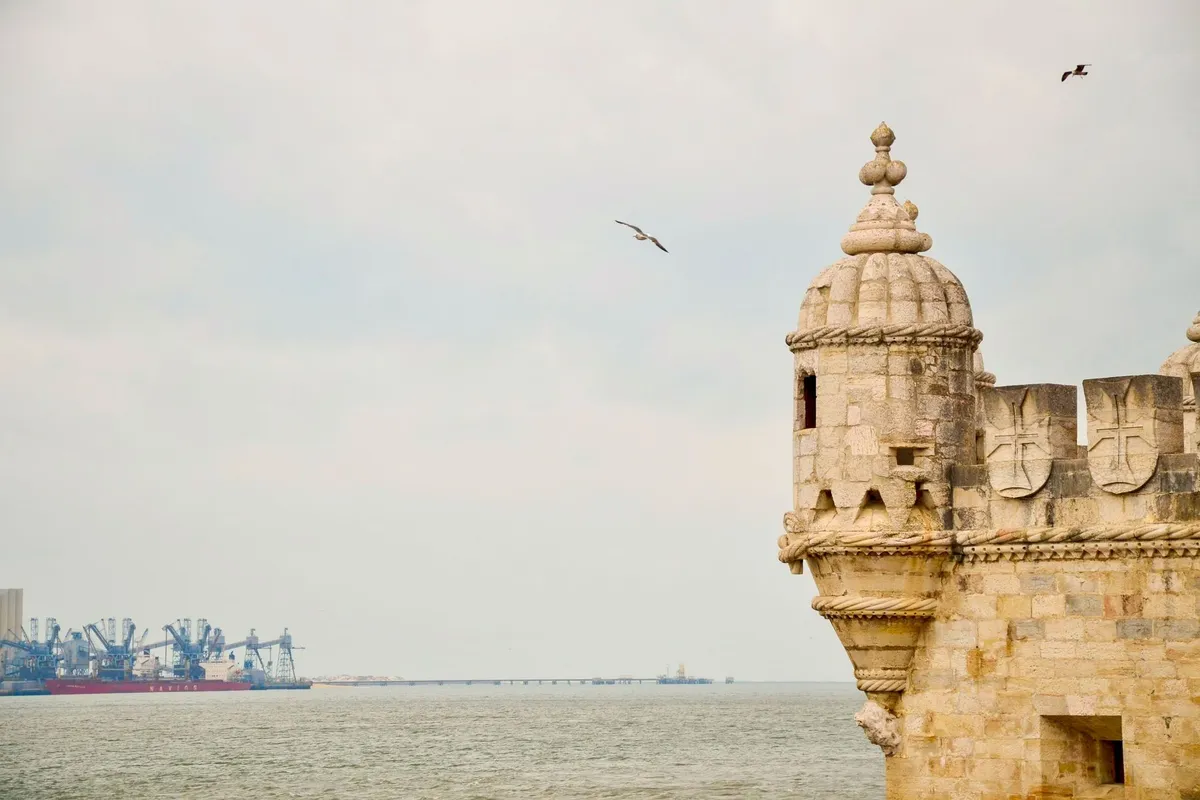
Securing belem tower tickets requires much tighter planning than it used to, because entry inside the stone fortress is strictly capped at roughly 60 people at any given moment. Following a year-long conservation project funded by Portugal's Recovery and Resilience Plan (PRR), the tower reopened to visitors on May 26, 2026, operating with timed entry slots of up to 60 visitors every 30 minutes. That creates a hard daily ceiling of approximately 900 people, turning walk-up ticket purchases during high season into an almost guaranteed disappointment.
Standing directly on the waterline of the Tagus River estuary, this 16th-century fortification remains one of the most recognizable historic landmarks in Portugal. However, exploring its interior involves climbing a steep, narrow spiral staircase governed by traffic lights, squeezing through stone doorways, and navigating rooms devoid of museum furnishings. Knowing the transit options, the booking rules, and the physical limitations of the monument helps you decide whether to buy an interior ticket or simply admire the limestone masonry from the riverfront park.
Visiting Belém Tower Lisbon: Location, Arrival Routes, and Transit Options
Getting to Avenida de Brasília: Tram 15E, Train, and Bus Connections
Belém Tower is situated on the northern bank of the Tagus River at Avenida de Brasília (1400-038 Lisbon). Because Belém sits roughly six kilometers west of Praça do Comércio, reaching it requires using Lisbon's public transit network or taking a commuter train. If you are organizing your days across the capital, consulting a practical overview of Lisbon public transport helps you choose between local trams, buses, and suburban rail lines before setting out.
The most famous route is the Carris Tram 15E, which departs from Praça da Figueira and passes through Cais do Sodré before stopping near the tower at Largo da Princesa or Belém. The tram ride takes 25 to 35 minutes depending on central traffic, leaving you with an easy 400-meter walk toward the shoreline. For up-to-date timetables and network alerts, check the municipal transit operator via Carris. Alternatively, urban buses 714, 727, 728, 729, and 751 run along the Avenida da Índia corridor, connecting various districts directly to Belém.
My preferred transit connection is the CP Cascais suburban commuter train departing from Cais do Sodré station. The train reaches Belém station in just seven minutes, completely bypassing road traffic. From the platform, it is an easy 15-minute walk westward along the waterfront promenade. To reach the monument safely, use the pedestrian underpass at Belém station or the dedicated pedestrian overpass near the tower to cross the active railway tracks and the busy lanes of Avenida da Índia and Avenida de Brasília.
Parking Facilities, Waterfront Walking Routes, and Luggage Restrictions
Driving to Belém is rarely worth the hassle due to heavy traffic on the riverfront roads. If you do arrive by car, paid surface parking is available near Doca do Bom Sucesso and Praça Afonso de Albuquerque. These open-air spaces operate under the municipal regulations of EMEL, categorized within red and yellow parking zones where hourly rates apply and maximum duration limits are enforced by street wardens.
The riverside promenade connecting Belém station, the docks, and the tower is broad, completely flat, and shared by pedestrians and cyclists. It provides an uninterrupted walking route along the Tagus River estuary, with direct views of passing sailboats and the 25 de Abril suspension bridge. When exploring the surrounding riverfront, you can follow my comprehensive Belém guide to link the tower with nearby gardens and waterfront plazas in a single walking loop.
Belém Tower does not have lockers, a cloakroom, or luggage storage facilities of any kind. Monument security strictly prohibits entry to visitors carrying suitcases, wheeled bags, or oversized trekking backpacks. If you arrive with large luggage, staff will turn you away at the wooden bridge turnstiles, and your non-refundable ticket will be forfeited.
If you take Tram 15E during mid-day rush hours, keep your belongings zipped up and close to your chest. Crowded tram carriages between Cais do Sodré and Mosteiro dos Jerónimos are well-known working grounds for opportunistic pickpockets targeting distracted visitors.
Torre de Belém Opening Hours, Seasonal Timing, and Daily Capacity Rules
Standard Operating Hours, Weekly Monday Closures, and Holiday Schedules
Under the operational oversight of Museus e Monumentos de Portugal (MMP), standard torre de belem opening hours run from Tuesday through Sunday between 09:30 and 17:30. The final admission of the day takes place at 17:00, at which point the entrance turnstiles on the footbridge lock automatically. Anyone arriving after 17:00 will not be admitted, even with a pre-booked time slot.
Belém Tower remains completely closed to the public every Monday throughout the year. Additionally, the monument observes full-day closures on five statutory holidays: January 1 (New Year's Day), Easter Sunday, May 1 (Labor Day), June 13 (Lisbon Municipal Holiday for Saint Anthony), and December 25 (Christmas Day). Always confirm these scheduled closures before building your weekend itinerary, as verified on Visit Lisboa.
The monument reopened on May 26, 2026, following twelve months of structural masonry stabilization and stone cleaning under the national Recovery and Resilience Plan (PRR). The exterior surfaces are now clear of scaffolding, but internal access rules remain tightly controlled to preserve the delicate 16th-century limestone floors and masonry.
Best Times of Day to Avoid Crowds and Manage the 2026 Visitor Cap
The revised capacity framework strictly limits simultaneous occupancy inside the tower to approximately 60 people. MMP manages this through phased entry slots that allow up to 60 ticket holders inside every 30 minutes, capping total visitor intake at around 900 people per operating day. With daily capacity restricted to this ceiling, entering during a quiet window requires strategic timing.
The optimal time to enter is the initial morning slot from 09:30 to 10:30. Arriving on the footbridge at 09:15 lets you enter with the very first batch, meaning you can ascend the narrow spiral staircase before any downward passenger traffic starts queuing on the upper landings. The stone chambers feel tranquil, and you can take unobstructed photographs of the river from the rooftop terrace.
Between 11:30 and 15:00, the monument experiences its most severe operational bottlenecks. Large tour groups converge on the riverfront, filling the open lawn of Jardim da Torre de Belém and creating long lines along the exposed wooden footbridge. Mid-afternoon slots from 15:30 to 16:30 offer pleasant angled light over the estuary, but booking the final 16:30 slot carries the risk of a rushed visit, as staff begin clearing visitors from the upper levels toward the exit by 17:20.
Recommended Visit Duration and Photography Guidelines
A thorough exploration of the interior takes between 45 and 60 minutes. Because the building is relatively compact, that time is spent examining the artillery casemates, walking through the vaulted halls, and climbing between the five vertical levels. You should also factor in an extra 20 to 30 minutes outside to stroll around Jardim da Torre de Belém and take pictures of the exterior facade from the shoreline sand at low tide.
Amateur handheld photography and smartphone recording are permitted throughout the monument without any extra fee. However, the use of tripods, monopods, selfie sticks, and flash equipment is strictly prohibited inside the chambers and on the battlements to maintain visitor flow and prevent accidental impacts against historical stonework. Commercial photography or film production requires written permission submitted at least 15 days in advance through official MMP administrative channels.
When taking photos on the open bulwark terrace and the upper roof, be prepared for brisk Atlantic gusts coming off the Tagus River. Secure your phone or camera with a wrist strap, as sudden crosswinds near the stone crenellations can catch you off guard.
Belém Tower Tickets: Current Admission Costs, Concessions, and Lisboa Card Entry
Torre de Belém Admission Prices and Standard Tiered Rates
Navigating torre de belem admission requires purchasing your tickets through official government portals well before your visit. Standard adult admission for visitors aged 25 to 64 is €15.00. Concession rates provide a 50% discount for qualifying age groups, while younger children and disabled guests enter free of charge when accompanied by a paying adult.
| Ticket Category | Eligible Age / Group | Official Price (EUR) | Required Verification |
|---|---|---|---|
| Standard Adult | Ages 25 to 64 | €15.00 | None required |
| Senior Concession | Ages 65 and older | €7.50 | Government ID or passport |
| Youth / Student | Ages 13 to 24 | €7.50 | ID, Cartão Jovem, or student card |
| Child Admission | Ages 0 to 12 | €0.00 | Proof of age (must book €0 slot) |
| Visitors with Disability | Impairment ≥60% + 1 guide | €0.00 | Official disability medical certificate |
Even if you qualify for free entry (such as traveling with children aged 12 and under or holding an official disability certificate), you must still book a zero-euro (€0.00) ticket online in advance. Because every human body counts toward the strict 60-person half-hour quota, you cannot simply bring children to the turnstile without an allocated digital ticket.
Lisboa Card Fast Track, Acesso 52 MMP, and Concession Entry Rules
Holders of the Lisboa Card receive 100% free admission to the monument, making it a popular choice for visitors spending several days in the capital. However, having the physical card is no longer enough to walk straight in. You must go to the ticketing portal before your visit, select the Lisboa Card option, and reserve an exact timed-entry slot by entering your card's serial number. When arriving at the footbridge, staff will scan both your timed reservation QR code and your active physical Lisboa Card.
Portuguese citizens and foreign legal residents living in Portugal can take advantage of the national "Acesso 52" program. Administered by MMP, this benefit grants residents 52 free visits per calendar year across national museums and monuments, including Belém Tower. Residents must register through the official ticketing platform to reserve their timed slot using their national citizen or residency card number before arriving.
Turnstile staff systematically verify discounted tickets. If you purchase a senior ticket (€7.50) or a youth ticket (€7.50), have your passport, European Youth Card (Cartão Jovem), or official university student card ready for visual inspection. If you cannot present valid documentation, the turnstile staff will void the ticket and require you to purchase a standard €15.00 ticket if any slots remain open that day.
Official Online Booking Channels, Slot Allocations, and Non-Refundable Policies
To avoid third-party markups, purchase your belem tower tickets directly through the state portal operated by Bilheteira Património Cultural. The site displays real-time calendar availability for each 30-minute block from 09:30 to 16:30. Once a specific half-hour slot hits its 60-ticket ceiling, that window closes permanently on the system.
All tickets bought through the official MMP network are strictly non-refundable, non-exchangeable, and cannot be rescheduled to an alternate time or day. If you miss your designated 30-minute window due to transit delays or getting stuck in traffic on Avenida da Índia, your booking becomes invalid, and staff cannot override the turnstile system to admit you in a later group.
Because the post-restoration capacity caps daily entry at roughly 900 people, peak summer slots, spring weekends, and autumn holiday periods routinely sell out several days in advance. I strongly advise booking your entry slot three to five days before your planned visit. Relying on same-day ticket availability at the site rarely works, as the remaining slots are typically sold out by early morning.
Architectural Layout: From the Bulwark Casemates to the Rooftop Terrace
Manueline Architecture, Fortification Origins, and Francisco de Arruda's Design
Belém Tower was commissioned by King Manuel I and constructed between 1514 and 1519 under the architectural direction of Francisco de Arruda. Originally named the Torre de São Vicente after the patron saint of Lisbon, it was designed as a strategic maritime bastion positioned to cross cannon fire with the Fortress of São Sebastião da Caparica on the southern bank, defending the sea approaches to the Tagus River estuary.
Arruda had previously worked on Portuguese military fortifications in North Africa, and he incorporated Moorish architectural influences into the tower's design. Visitors can see this blend in the ribbed cupolas topping the corner watchtowers, paired with the exuberant carved motifs of Portuguese late Gothic, known as Manueline architecture. Prominent carvings across the exterior walls display heraldic shields, the armillary sphere (the personal emblem of King Manuel I), and the cross of the Order of Christ.
Recognized for its exceptional cultural and architectural value, the tower was classified as a National Monument in 1907. In 1983, it was formally inscribed as a UNESCO World Heritage Site in a joint listing with the nearby Jerónimos Monastery, celebrating Portugal's age of maritime exploration and early modern defensive architecture.
Lower Bulwark Terrace, Cannon Casemates, and the Rhinoceros Gargoyle
The monument consists of two primary architectural structures: the low-slung polygonal bastion casemate projecting into the river, and the rectangular five-story tower rising immediately behind it. When you cross the wooden footbridge and enter the lower bulwark battery, you step into a vaulted stone casemate featuring 16 cannon embrasures positioned low against the waterline. This low-angle battery was engineered to deliver flat-trajectory cannon fire capable of skipping cannonballs across the surface of the water to breach enemy ship hulls.
Above the subterranean casemate lies the open bulwark terrace, surrounded by battlements with domed bartizans (guérites) positioned at each corner. In the center of the stone deck, circular openings called oculi connect down to the battery floor, originally designed to vent dense gunpowder smoke during heavy artillery barrages. From this open platform, you get close-up views of the delicate rope-molded masonry encircling the parapets.
Before heading into the tower staircase, look closely at the exterior corbels supporting the watchtower turrets on the western wall. Carved into the limestone is the famous rhinoceros gargoyle. King Manuel I commissioned this carving after an Indian rhinoceros was sent to Lisbon in 1515 as a diplomatic gift from the Governor of Portuguese India, Afonso de Albuquerque. The stone sculpture represents the first artistic rendering of a rhinoceros in European art since the Roman Empire, capturing the public fascination sparked by the exotic beast over five centuries ago.
Inside the Five Levels: Governor's Hall, Kings' Hall, and Rooftop Overlook
Passing from the bulwark into the tower proper, you ascend through five distinct levels linked by the internal staircase shaft:
- Level 1 — Sala do Governador (Governor’s Hall): This first vaulted room provided administrative access to the defensive watchtowers and features a stone opening leading down to the internal cistern that once stored freshwater for the garrison.
- Level 2 — Sala dos Reis (Kings’ Hall): The most ornate interior chamber, containing an elaborately carved Renaissance stone fireplace, vaulted stone ribs, and eight round arched doorways leading out to an open southern loggia with views over the water.
- Level 3 — Sala das Audiências (Audience Chamber): A spartan hall used for military council meetings and judicial administrative hearings, featuring carved stonework around the windows.
- Level 4 — Capela (Chapel): An intimate devotional oratory with an intricate Manueline rib-vaulted ceiling, decorated with carved royal armillary spheres and heraldic symbols of the Portuguese crown.
- Level 5 — Rooftop Observation Terrace: The crown of the fortification, offering an open-air 360-degree panorama taking in the Tagus River estuary, the 25 de Abril suspension bridge, the Cristo Rei sanctuary on the southern bank, and the parklands of Belém.
Keep your expectations grounded regarding interior furnishings. The chambers inside Belém Tower are completely bare stone rooms; there are no historical tapestries, period furniture, or weapon displays inside. The visit focuses entirely on the stone carving, military engineering, and panoramic river vistas.
Honest Drawbacks, Physical Accessibility, and Bottlenecks Inside
The Spiral Staircase Bottleneck and Traffic Light Transit System
The single biggest operational frustration when visiting belem tower lisbon is the vertical circulation inside the building. All movement between the lower casemate, the four residential chambers, and the rooftop observation terrace is channeled through a single, extremely narrow stone spiral staircase. There is no separate staircase for ascending and descending visitors.
To manage movement and prevent dangerous head-on encounters on the narrow stone steps, MMP uses an automated traffic light system. Small red and green indicator lights mounted on each floor control entry into the stairwell. A digital timer counts down while the staircase flows in one direction, forcing visitors on other levels to wait behind a rope barrier until the light turns green.
During my visits, I regularly spent three to six minutes standing on cramped stone landings waiting for downward traffic to clear before I could climb to the next level. If you visit during the busier afternoon hours, this stop-and-go progression can make a quick climb feel slow and disjointed. Moving patiently and keeping your belongings compact helps minimize delays for everyone on the stairs.
Claustrophobia, Mobility Restrictions, and Weather Exposure Risks
Due to its 16th-century military layout, Belém Tower is completely inaccessible to wheelchair users and visitors with severe mobility impairments. There are no elevators, mechanical chair lifts, or ramps inside the building. Reaching even the first terrace requires walking across an elevated wooden footbridge and ascending several stone steps, while reaching the upper roof requires climbing more than 100 uneven spiral steps.
The spiral staircase shaft is tightly enclosed, with narrow limestone treads that have been worn smooth and slightly concave by millions of footfalls over the centuries. When maritime rain blows off the Tagus, moisture tracks onto the steps, making them slick. Anyone suffering from acute claustrophobia, vertigo, or balance issues will find the staircase uncomfortable.
Additionally, the interior lacks modern climate control. The stone chambers feel noticeably cold and damp during winter visits, while the narrow staircase traps humid heat on hot summer afternoons. There are also no public restrooms or drinking water fountains inside the monument; the nearest paid municipal toilets are located out in the park near the coach parking area.
Who Should Visit the Interior vs. Who Should Settle for the Exterior Shoreline
Because interior capacity is limited and the rooms are completely unfurnished, stepping inside the tower is not the best choice for every traveler. Deciding whether to buy a ticket or stay outside comes down to your personal travel priorities and physical comfort.
- Who should buy an interior ticket: Travelers passionate about 16th-century military engineering, fans of Manueline stonemasonry, architecture buffs eager to examine Arruda's vaulted ceilings, and Lisboa Card holders who reserved an early morning slot to enjoy the rooftop river vista.
- Who should stick to the exterior: Families traveling with toddlers or baby strollers, visitors with knee or hip mobility issues, travelers with severe claustrophobia, and anyone on a tight 48-hour Lisbon schedule who would rather dedicate their time to the richly furnished cloisters of Jerónimos Monastery.
The truth is that Belém Tower's most iconic angle is its exterior profile viewed from the grassy shoreline of Jardim da Torre de Belém. Taking a morning walk along the sand at low tide gives you stunning views of Arruda's masonry, the watchtower cupolas, and the wooden bridge entirely for free, without waiting at a single traffic light.
Practical Neighborhood Context and Final Visitor Verdict
Pairing Belém Tower with Jerónimos Monastery and Padrão dos Descobrimentos
To get the most out of your transit trip from central Lisbon, pair Belém Tower with the neighboring monuments along the waterfront. The most logical walking route moves eastward from the tower toward the commercial center of Belém, avoiding any unnecessary backtracking across the busy railway line.
- Start at Belém Tower (09:30–10:30): Begin your morning at the tower by booking the first 09:30 slot to explore the casemates and climb the battlements before the crowds arrive.
- Walk along the Waterfront (10:30–11:00): Head east on the pedestrian promenade along the Tagus River, passing the marina at Doca do Bom Sucesso. It is an easy, flat one-kilometer walk to the towering limestone prow of Padrão dos Descobrimentos (Monument to the Discoveries).
- Cross Praça do Império (11:00–11:15): Use the pedestrian underpass near the monument to pass safely beneath Avenida da Índia and the train tracks, emerging directly into the formal gardens of Praça do Império.
- Explore Jerónimos Monastery (11:15–13:00): Tour the co-listed UNESCO World Heritage site, focusing on the Manueline cloister and the Church of Santa Maria de Belém; consult my detailed guide to Jerónimos Monastery for ticketing tips and advice on entering the church for free.
- Pastéis de Belém (13:00 onwards): Walk five minutes east along Rua de Belém to the historic bakery at Rua de Belém, 84–92, where warm custard tarts dusted with cinnamon have been made using the original monastic recipe since 1837.
If you are piecing together an overall sightseeing plan for the city, comparing the tower with other landmark fortifications like Castelo de São Jorge gives you a realistic idea of how Lisbon's defensive history evolved across different centuries and hills.
Final Verdict: Is Stepping Inside Belém Tower Worth the Wait and Strict Quota?
Belém Tower is an architectural masterpiece on the outside, but inside it remains an austere, unfurnished military garrison. The €15.00 general admission ticket is reasonable if you appreciate historic masonry, low-angle artillery defense, and elevated river views across the Tagus estuary. However, if you are expecting furnished royal chambers, extensive museum exhibition halls, or spacious viewing terraces, the tight staircase queues and spartan interior will leave you disappointed.
For casual travelers with limited time, photographing the tower from the waterfront park and spending your admission budget on Jerónimos Monastery provides a far richer cultural experience. If you do choose to enter, adhere strictly to these practical rules:
- Reserve your timed-entry slot online three to five days in advance through the official MMP booking portal.
- Choose the 09:30 or 10:00 morning slot to avoid traffic light congestion on the spiral stairs.
- Leave all suitcases and bulky backpacks at your hotel, as on-site storage does not exist.
- Wear sturdy, non-slip footwear to stay secure on the damp, worn stone steps.
- Use the public park restrooms before stepping onto the wooden approach footbridge.
Approached with realistic expectations and a pre-booked ticket, Belém Tower provides a memorable glimpse into Portugal's 16th-century coastal defenses and Francisco de Arruda's unique stone architecture.