
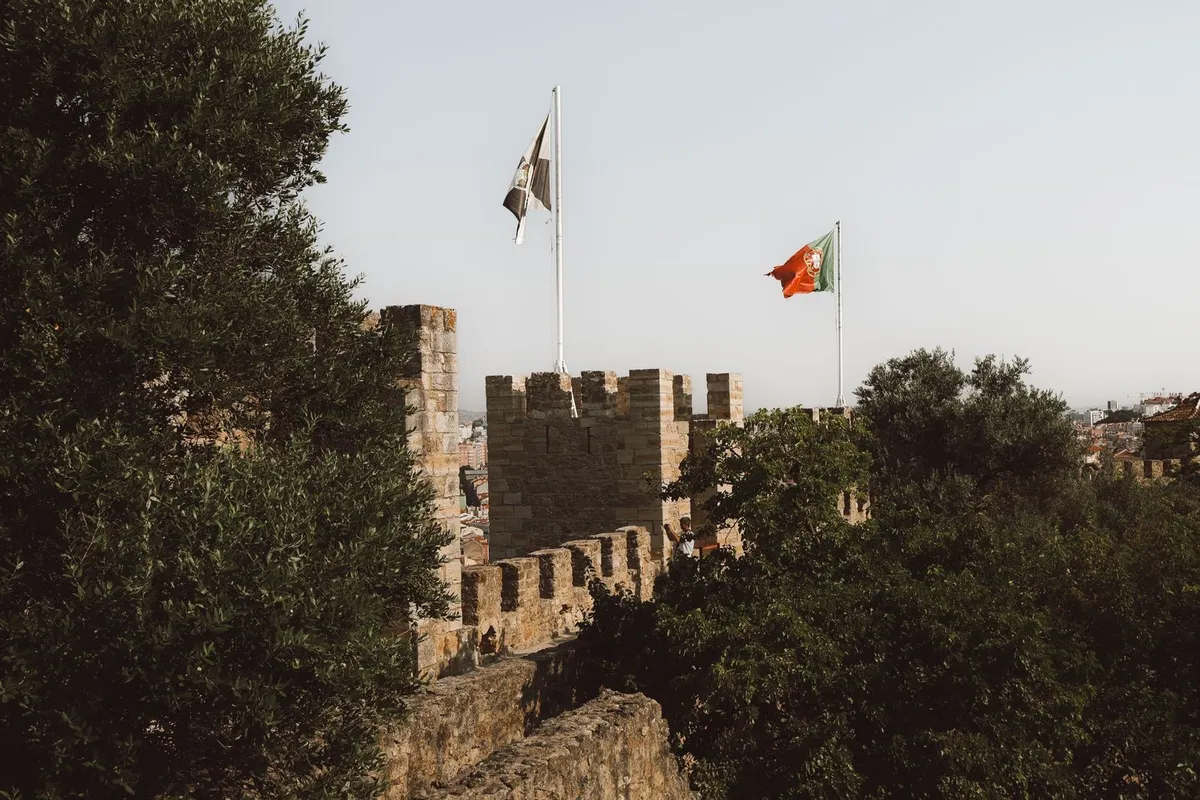
When organizing a trip to Lisbon, figuring out São Jorge Castle: how to plan your visit saves you from steep, unnecessary climbs in peak heat and long ticket queues. The fortress is an ancient military alcáçova and archaeological site rather than an ornate royal residence. The medieval royal palace was destroyed in the 1755 earthquake, and the present battlement walls largely date to the 1938–1940 restoration project under the Estado Novo regime.
A successful trip requires planning around logistical realities: intense summer sun across unshaded stone courtyards, narrow cobblestone alleys around the Alfama ridge, strict entry timeframes, and precise rules on how to reach the gates.
Ticket Types, Online Booking, and Pricing Strategies
Official Admission Rates, Concessions, and In-Person Payment Methods
Admission pricing for Castelo de São Jorge follows fixed municipal cultural rates. Standard adult admission costs €17.00 (approx. $18.50 USD). Visitors aged 13 to 25 pay a discounted youth rate of €8.50 (approx. $9.25 USD), while seniors aged 65 and older pay €14.00 (approx. $15.25 USD). Visitors with specific access needs pay €12.00 (approx. $13.10 USD), and one accompanying assistant enters free of charge.
Children aged 12 and under enter free of charge (€0.00), but they cannot simply walk past security. Every child must hold an official zero-euro ticket issued either online or at the ticket counter to pass the automatic entry turnstiles. To claim any discounted or free ticket, you must present a valid physical or digital photo ID or student card confirming the date of birth.
| Ticket Category | Official Price (EUR) | Approx. Price (USD) | Proof Required |
|---|---|---|---|
| Adult (26–64) | €17.00 | $18.50 | None |
| Youth (13–25) | €8.50 | $9.25 | Photo ID / Student Card |
| Senior (65+) | €14.00 | $15.25 | Government Photo ID |
| Access Needs (Disabled) | €12.00 | $13.10 | Disability proof (assistant free) |
| Children (0–12) | €0.00 | $0.00 | Zero-euro ticket required |
At the Santa Cruz ticket office, staff accept payments by Cash, Multibanco, Visa, Visa Electron, MB Way, Revolut, American Express, and Mastercard, as outlined on the official Castelo de São Jorge ticketing page.
Purchasing via BOL vs. Third-Party Resellers to Skip the Ticket Lines
Bilheteira Online (BOL) is the only authorized primary online sales platform for Castelo de São Jorge. Buying directly through BOL lets you purchase standard and concession tickets at official face value without service charges. Third-party ticket brokers and tour agencies frequently inflate these prices to €20.00–€25.00 ($22.00–$27.00 USD) by bundling generic audio downloads or adding booking commissions.
When you purchase your tickets via BOL, you receive an electronic PDF containing a scannable barcode and QR code. You do not need to print this paper voucher; scanning the code directly from a smartphone screen at the turnstiles works reliably. An online ticket allows you to skip the physical ticket window line, though you still join the brief queue for security scanning and turnstile admission during peak arrival times.
Download your BOL ticket PDF to your phone storage before ascending the hill. Mobile data reception can drop near the thick stone perimeter walls around Rua de Santa Cruz do Castelo.
Using the Lisboa Card for Free Castle Admission
If you purchase a Lisboa Card, standard entry to the castle is included at 100% discount, saving the full €17.00 adult admission fee. This single stop offsets a substantial portion of the card's 24-hour, 48-hour, or 72-hour purchase cost. When balancing cultural passes across your schedule, mapping out three days in Lisbon with a realistic itinerary helps determine whether the card covers enough transit and monuments to justify buying it.
You cannot reserve a timed entry slot online in advance with a Lisboa Card. Upon reaching the castle entrance, cardholders must join the dedicated priority ticket window to present the physical card. The agent scans the card and prints a zero-euro admission ticket for the turnstiles.
While an adult Lisboa Card grants free admission, teenagers aged 13 to 15 traveling on minor transit passes do not receive free castle entry. You must buy their €8.50 youth tickets at the booth.
Opening Hours, Daylight Constraints, and Peak Crowds
Summer vs. Winter Schedules and Cut-Off Times
The fortress operates on two distinct seasonal schedules throughout the year. Operating hours are strictly maintained by municipal site management, as documented in the Castelo de São Jorge visitor schedules:
- Summer Schedule (March 1 – October 31): Open daily from 9:00 AM to 9:00 PM. Final ticket sales and admissions end promptly at 8:30 PM. The Permanent Museum inside the complex also operates from 9:00 AM to 9:00 PM.
- Winter Schedule (November 1 – February 28/29): Open daily from 9:00 AM to 6:00 PM. Final admission is cut off at 5:30 PM. The Permanent Museum operates from 9:00 AM to 6:00 PM.
The monument closes completely to the public on five specific days each year: January 1, May 1, December 24, December 25, and December 31. On all other calendar dates, the grounds remain open seven days a week.
Wall Rampart Closures and Evening Sunset Crowds
The overall closing time of the complex does not match the closing time for the high defensive fortifications. During the winter period, access staircases to the wall-walks and defensive towers close at 5:30 PM. In the summer period, security staff close rampart stairs earlier than the grounds, between 6:00 PM and 9:00 PM, based on failing natural light.
I have seen visitors arrive an hour before dusk expecting to stroll the stone parapets for sunset, only to find the access gates chained off. The lower grounds, including Praça d'Armas and the garden terraces, stay open until the official closing hour, but the high towers close earlier for safety. Always ask staff at the Santa Cruz entrance gate for the exact rampart closing time scheduled for that afternoon.
Best Times of Day to Avoid Bottlenecks and High Midday Heat
Tourist crowding at the fortress concentrates heavily between 11:00 AM and 3:30 PM. During this window, organized cruise excursions from the port and international tour buses arrive via Alfama, resulting in lines at the turnstiles and crowded walkways.
Arriving right at 9:00 AM provides quiet exploration before tour groups reach the summit. Alternatively, arriving after 4:30 PM in summer lets you explore after the midday heat subsides. The open stone courtyards and ramparts have minimal shade, and summer stone temperatures frequently exceed 30°C (86°F). Water fountains are limited inside the grounds, so carry a reusable water bottle.
Getting to the Castle: Navigating Lisbon's Hills, Public Lifts, and Transit
Taking the Free Elevador do Castelo from Baixa
Lisbon’s municipal transport infrastructure includes a two-stage public lift system called the Elevador do Castelo, which is completely free to use. Many first-time visitors confuse this network with the famous Elevador de Santa Justa, which charges a €6.00 Carris fare, draws long tourist lines, and connects Baixa to Carmo rather than the castle.
To use the free castle lifts from the downtown Baixa district, follow this route:
- Enter the historical building facade at Rua dos Fanqueiros 176 and take the first elevator up to Rua da Madalena. This elevator operates daily from 9:00 AM to 9:00 PM.
- Walk a few steps across Rua da Madalena to the Chão do Loureiro former market building (identifiable by the ground-floor Pingo Doce supermarket).
- Take the interior elevator up to the top level, which exits directly onto Costa do Castelo.
Exiting the top level leaves a 250-meter uphill walk along Costa do Castelo to reach the castle entrance. It reduces the total vertical climb while avoiding transit fares.
Public Transit Options: Carris Bus 737 and Tram 28E
If you want to bypass the climb completely, Carris minibus line 737 is the most direct public transit option. Departing from Praça da Figueira in Baixa, this small vehicle navigates the tight residential alleys and terminates at the Castelo stop right outside the exterior gate on Rua de Santa Cruz do Castelo. Standard Carris transit tickets and Viva Viagem / Navegante cards are accepted onboard.
Historic Tram 28E also services the hill, but it does not drop passengers at the castle gate. Tram 28E stops downhill at Miradouro de Santa Luzia / Largo das Portas do Sol. From that stop, you face an uphill 5-to-10-minute walk over worn cobblestones. The tram also experiences 45-to-60-minute queues at its Martim Moniz terminal and is known for pickpockets during peak hours.
Vehicle Restrictions, Rideshares, and Parking Near Santa Cruz
Private cars and standard city taxis cannot drive directly to the castle gates. The Santa Cruz do Castelo neighborhood is restricted to authorized local residents, and automated rising bollards block non-resident vehicle access. If you take a taxi or rideshare, the driver must drop you off outside the zone near Largo das Portas do Sol or Chão do Loureiro.
Drivers using personal or rental vehicles must use the underground paid parking facilities at Portas do Sol or Chão do Loureiro, both roughly a five-minute walk from the gate. Direct vehicle access to the monument entrance is permitted exclusively for visitors with verified disabilities, which requires securing an authorized access code from municipal parking agency EMEL in advance.
Do not attempt to drive a rental car up the narrow alleys surrounding the citadel. The roads dead-end into restricted residential zones, and turning around on the steep inclines is difficult.
Navigating the Grounds: Key Highlights and Guided Timetables
The Tower of Ulysses and Camera Obscura Periscope Experience
The Tower of Ulysses (Torre de Ulisses) houses an optical periscope and Camera Obscura system based on principles documented by Leonardo da Vinci. A double-lens and plane mirror assembly atop the tower catches sunlight and projects live, 360-degree panoramic images of Lisbon onto a concave horizontal surface inside a darkened room. A castle guide maneuvers the system, showing neighborhoods, plazas, and transit movements across the city in real time.
Access to the 20-minute presentation is included with standard admission. Attendance is capped at 20 visitors per session on a first-come, first-served basis, with no online advance booking. The operating schedule shifts by season:
- November through February: 11:00 AM – 1:00 PM
- March: 11:00 AM – 2:00 PM
- April & September: 11:00 AM – 3:00 PM
- May through August: 11:00 AM – 4:00 PM
- October: 11:00 AM – 1:00 PM
The periscope requires natural direct sunlight to project visible imagery. During heavy cloud cover, rain, or overcast conditions, the Camera Obscura closes immediately. Confirm its operating status at the ticket office when you arrive.
Official Guided Tours and Accessing the Núcleo Arqueológico
The Núcleo Arqueológico protects excavations revealing three distinct historical eras: Iron Age settlements dating to the 7th century BC, 11th-century residential structures from the Moorish Islamic period, and the subterranean foundations of the former 15th-century royal palace.
You cannot explore this archaeological site on your own. Admission is restricted to participants joining the official 1-hour "Discovering the Castle" guided tour, as detailed in the Castelo de São Jorge guided tours program. This tour is included in your general admission ticket at no extra charge, but slots are limited. You must sign up in person at the Santa Cruz ticket office upon arrival.
| Tour Language | Year-Round Departure Times | Extended Summer Departures |
|---|---|---|
| English | 11:00 AM, 3:00 PM | 4:00 PM (Mar–Oct), 6:00 PM (May–Aug) |
| Portuguese | 10:30 AM, 2:30 PM | 3:30 PM (Mar–Oct), 5:30 PM (May–Aug) |
| Spanish | 12:00 PM, 4:00 PM | Subject to daily scheduling |
The Moorish Fortifications, Praça d'Armas, and Battlements
The inner alcáçova features eleven surviving defensive towers, a restored dry moat, and the historic Praça d'Armas. Under the shaded stone pines of the central esplanade stands the bronze statue of Dom Afonso Henriques, Portugal's first monarch, who captured the citadel from Moorish rule during the Siege of Lisbon in 1147.
Walking the stone battlements provides clear sightlines across Lisbon’s key landmarks:
- The broad expanse of the Tagus River estuary and the commerce docks.
- Praça do Comércio and the grid pattern of the rebuilt Baixa Pombalina.
- The southern skyline across to the Sanctuary of Christ the King (Cristo Rei).
- The red steel spans of the 25 de Abril suspension bridge.
- The roofless Gothic ruins of the Carmo Convent standing on the opposite hill.
Practical Rules, Safety Risks, and Accessibility Barriers
Rampart Hazards, Cobblestones, and Stroller Accessibility
Castelo de São Jorge is a preserved military ruin, and the walking surfaces reflect this terrain. Stone steps along the defensive walls have irregular heights, polished edges, and worn treads. Several elevated curtain walls have low outer parapets without continuous safety railings along drops into the moat and inner courts. During rainy or damp weather, the limestone steps become slippery.
Wear flat shoes with rubber grip soles; polished leather soles or high heels make walking hazardous on this terrain. For visitors traveling with young children, wheeled strollers are impractical. Strollers cannot navigate the steep, narrow rampart staircases, and moving them across the uneven courtyard cobblestones is jarring. Use a baby carrier or sling instead.
Mobility Access, Wheelchair Loans, and Advance Reservations
Visitors with physical disabilities face distinct physical limitations inside the citadel due to its historic stone architecture. While the lower gardens, romantic esplanades, and museum shop feature leveled paving and wooden ramps, the curtain walls, defensive towers, and Camera Obscura are accessible only via steep stone steps without lifts.
To assist mobility on the accessible lower levels, the monument maintains four manual wheelchairs and an electric Swiss-Trac towing device available for visitors to borrow at no cost. You must reserve this specialized equipment at least 24 hours in advance by emailing [email protected]. Accessible restrooms are located on the ground floor near the main esplanade café.
Security Policies: Peafowl, Pets, Baggage, and Drones
The castle gardens host roughly 40 resident Indian peacocks that roam freely among the stone pines. Feeding these birds is strictly prohibited to preserve their health and prevent aggressive behavior around food. Domestic pets are banned from the castle grounds; only certified guide and service dogs are admitted under Portuguese Decree-Law no. 118/99.
The castle does not provide luggage storage lockers, cloakrooms, or a left-luggage desk. Rolling suitcases and large travel backpacks cannot fit through the narrow security turnstiles, and navigating luggage over ancient cobblestones is not allowed. Store your luggage before heading up the hill at left-luggage spots near Rossio station or through network lockers in Baixa. Selecting the right base helps manage these logistics, as detailed in our guide on where to stay in Lisbon across different neighbourhoods.
Operating recreational drones over Castelo de São Jorge or the historic Alfama district is illegal without advance permits. The Portuguese Civil Aviation Authority (ANAC Regulation 1093/2016) and the National Aeronautical Authority (AAN) enforce strict no-fly zones across central Lisbon due to airport airspace corridors and dense crowds.
São Jorge Castle: How to Plan Your Visit — Final Verdict and Decision Matrix
Time Commitment and Who Should Prioritize or Skip the Castle
A standard visit to Castelo de São Jorge requires between 1.5 and 2.5 hours. This allows sufficient time to tour the ramparts, attend the 20-minute Camera Obscura periscope session, walk through the small Permanent Museum exhibition, and view the archaeological trenches on a guided tour.
Deciding whether to add the castle to your itinerary depends on your travel priorities:
- Prioritize the visit if: You are visiting Lisbon for the first time, hold an active Lisboa Card (giving you free admission), or have an interest in military architecture and archaeology.
- Skip the visit if: You have severe knee or hip mobility limitations (the best viewpoints require steep climbing), are on a zero-euro budget, or have a layover under 24 hours where transit up the hill consumes too much time.
Castle vs. Free Miradouros: Alternative Viewpoints in Lisbon
Many travelers climb to Castelo de São Jorge solely for its elevated panoramic views of the city. If your primary goal is seeing Lisbon from above at sunset with a beverage, Lisbon's public, free-access viewpoints (miradouros) offer practical alternatives without an admission fee:
| Viewpoint | Admission | Best For | Key Limitation |
|---|---|---|---|
| Castelo de São Jorge | €17.00 (or free with Lisboa Card) | Historic walls, peacocks, archaeology, Camera Obscura | Entry fee, early closing times, no outside drinks |
| Miradouro da Graça | Free (€0.00) | Viewing the castle from outside, pine-shaded café, sunset | Can get crowded during late afternoon |
| Miradouro de Nossa Senhora do Monte | Free (€0.00) | Highest natural viewpoint, wide panoramic skyline | Steep walk up through Graça, limited bench seating |
| Miradouro de Santa Luzia / Portas do Sol | Free (€0.00) | Azulejo tile walls, views over Alfama’s terracotta roofs | Positioned along the congested Tram 28 route |
The €17.00 ticket is worthwhile if you plan to walk the historic ramparts and explore the archaeological ruins. If your priority is relaxing with an open city view at dusk, Lisbon's free municipal miradouros are accessible at all hours and cost nothing.