
Planning a trip to Lisbon often revolves around three structures that define the city skyline: a Moorish citadel crowning the central ridge, a stone monastery celebrating oceanic routes, and a riverside fortification guarding the port. In seven years of living in Lisbon, I have walked the battlements in August heat, waited in ticket lines along the Tagus, and observed how poorly timed visits cost travelers half their sightseeing day. Visiting these monuments requires concrete logistical planning, as ticket desks enforce distinct digital booking portals, operational schedules, and strict capacity caps.
To help you navigate these Lisbon historic sites efficiently, I evaluated each monument against standardized benchmarks: architectural preservation, admission pricing, transit access, and crowd flow management. Below is the comparative analysis to help you decide when to visit, which tickets to book in advance, and whether spending hours in an interior queue is worth your time.
Comparative Matrix: Evaluating Key Lisbon Historic Sites
Selection Criteria and Side-by-Side Comparison
To evaluate these landmarks objectively, I restricted this comparison to properties holding primary national monument status within Lisbon's municipal boundaries. Each site represents a decisive epoch in Portuguese history, shifting from medieval defense along the Tagus River estuary to sixteenth-century maritime wealth under King Manuel I. Furthermore, each site features interior chambers or elevated rampart circuits open to ticketed public inspection.
I assessed each monument using four measurable criteria: structural authenticity, gate tariffs and age concessions, pedestrian and transit accessibility, and crowd control measures. Official 2026 entry tariffs range from €15.00 to €18.00 for standard adults, with universal free admission granted to children aged 12 and under. The table below outlines how these core properties compare across architectural typology, pricing, and operational trade-offs.
| Landmark | City | Type | Price From | Concessions | Top Advantage | Key Limitation |
|---|---|---|---|---|---|---|
| Castelo de São Jorge | Lisbon | Castle | €17.00 | Youth (13–25): €8.50; Senior (65+): €14.00; Child (≤12): Free | Panoramic viewpoints; open 7 days a week including Mondays | Steep pedestrian approach; unshaded stone terraces during summer |
| Jerónimos Monastery | Lisbon | Monastery | €18.00 | Child (≤12): Free; youth/senior discounts unavailable online | Preserved two-tier cloisters; free access to adjoining church | Closed Mondays; long security queues despite mandatory time slots |
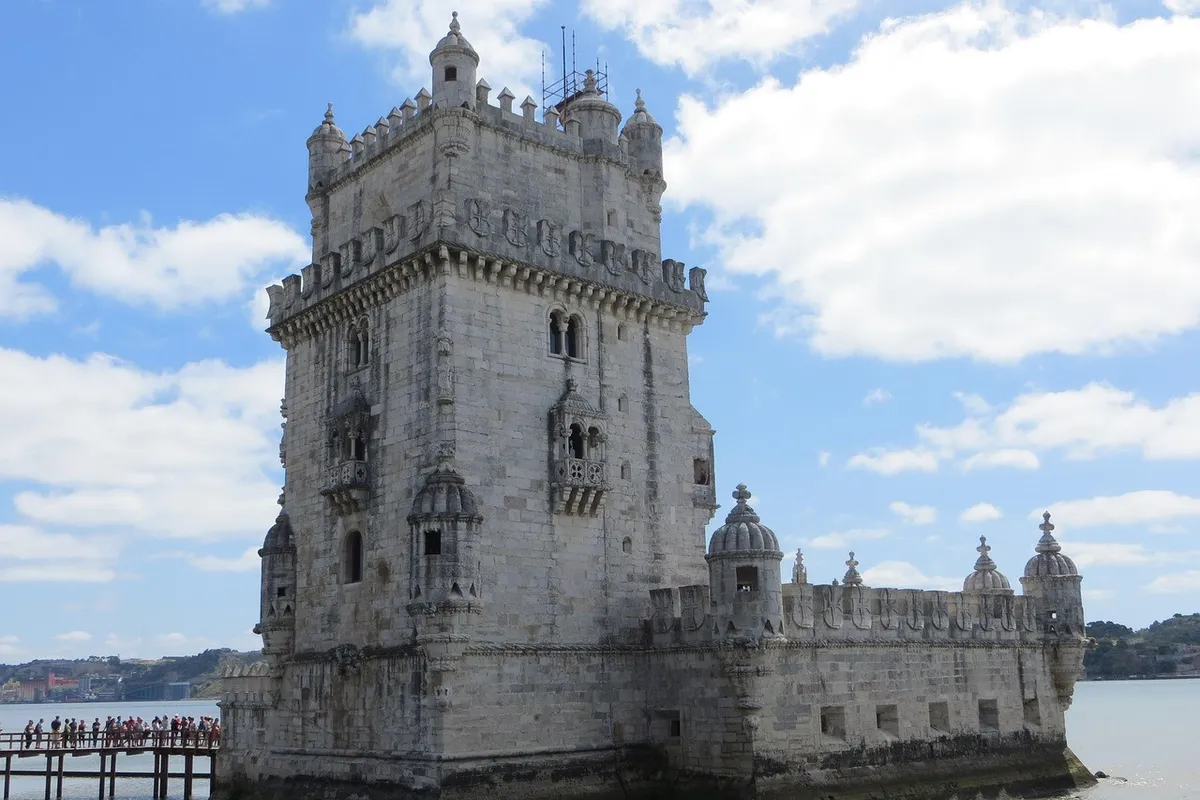
| Belém Tower | Lisbon | Historic tower | €15.00 | Child (≤12): Free; youth/senior discounts unavailable online | Shoreline setting; detailed Manueline stone carvings | Closed Mondays; 120-person cap; delays on single spiral staircase |
Sorting and Filtering Framework for Visitors
When organizing an itinerary across Lisbon historic landmarks, operating schedules dictate your calendar far more than geographic proximity. Jerónimos Monastery and Belém Tower form part of the state-managed UNESCO World Heritage Belém precinct and close to visitors every Monday throughout the year. Conversely, Castelo de São Jorge operates seven days a week, making it the primary cultural destination for Monday sightseeing when other major state monuments are locked.
Daily operating hours also vary significantly between the historic center and the waterfront. The Belém monuments welcome guests from 09:30 to 17:30 Tuesday through Sunday, maintaining a strict last-entry cutoff at 17:00. Castelo de São Jorge maintains longer access windows: 09:00 to 18:00 from November to February (last admission at 17:30), and 09:00 to 21:00 from March to October (last admission at 20:30). Visitors can filter these options by scheduling Castelo de São Jorge on Mondays or early evenings, while reserving midweek morning slots for Belém.
How I Evaluated Lisbon Historic Landmarks: Methodology and Field Benchmarks
Logistical Efficiency, Official Ticketing Channels, and Capacity Caps
My evaluation of ticketing logistics centers on platform transparency, queue duration, and capacity limitations. Lisbon operates two distinct ticketing administrations for its premier monuments. Castelo de São Jorge is managed municipally by EGEAC, using BOL (Bilheteira Online) as its sole authorized digital sales vendor. The Belém monuments fall under state jurisdiction, where Museus e Monumentos de Portugal handles bookings through the MEO Blueticket portal.
During my site inspections, I noted that the combined monument ticket covering both Jerónimos Monastery and Belém Tower has been completely eliminated by state cultural authorities. Each monument now requires an individual admission fee. Furthermore, Belém Tower enforces a maximum safety capacity of 120 visitors inside the structure at any single time, creating substantial bottleneck delays on the exterior wooden footbridge even for ticket holders arriving with confirmed reservations.
The former combined ticket (*bilhete conjunto*) for Belém monuments no longer exists. You must buy individual tickets for Jerónimos Monastery (€18.00) and Belém Tower (€15.00) via official portals or present an active Lisboa Card with pre-reserved time slots.
Cultural Depth, Architectural Integrity, and Visitor Experience
Beyond ticketing hurdles, I assessed each monument by the depth of its on-site interpretive materials and the quality of physical circulation. I reviewed the physical condition of the stonework, the legibility of historical signage, and the accessibility of auxiliary spaces such as museums, chapels, and archaeological digs. Castelo de São Jorge provides a largely distributed outdoor experience where visitors disperse across broad courtyards and ramparts, mitigating the sensation of dense crowds.
In contrast, the Belém sites concentrate visitors within rigid architectural corridors. Jerónimos Monastery handles high foot traffic through broad open-air galleries, though bottlenecking persists around the tomb alcoves and the main entryway. Belém Tower presents severe physical friction: its internal vertical transit relies on a single stone spiral staircase governed by an automated traffic-light system, which frequently leads to ten-minute holding delays between floor levels.
Castelo de São Jorge: Moorish Fortification and Alfama Ramparts
Medieval Rampart Circuit and Panoramic City Overlooks
Perched atop the central hill of the historic center, this Moorish fortification Alfama complex preserves an eleven-tower defensive circuit reconstructed largely in the twentieth century. Walking the southern curtain wall reveals uninterrupted perspectives across the Baixa grid, the 25 de Abril suspension bridge, and the Tagus River estuary. This castle ramparts panoramic viewpoint offers one of the widest vistas in the city, enabling visitors to trace the urban growth of Lisbon from its medieval core toward modern residential avenues.
Because the rampart path consists of narrow stone steps and uneven parapets without continuous safety railings, steady footwork is required. During summer afternoons, the stone walls absorb and radiate intense heat with virtually no tree cover along the defensive battlements. I observed that the most comfortable viewing conditions occur between 09:00 and 10:30, or during the final two hours before the summer 20:30 last-admission cutoff, when lower sun angles illuminate the river below.
Ulysses Tower Camera Obscura and Archaeological Site
Standard admission includes access to three distinct interpretive zones beyond the exterior curtain walls: the castle museum, the archaeological sector, and the Ulysses Tower Camera Obscura. The archaeological site displays three stratified settlement periods: seventh-century BC Iron Age domestic structures showing Phoenician trade influences, eleventh-century Islamic houses from the Taifa period, and the foundations of the medieval Royal Palace destroyed in the 1755 earthquake.
The Ulysses Tower houses an optical periscope that projects real-time 360-degree views of Lisbon onto a concave horizontal surface inside a darkened chamber. Demonstrations run in scheduled twenty-minute sessions led by multilingual site guides. Visitors must register at the tower entrance upon arrival. Access depends entirely on solar visibility, meaning overcast skies or rainfall will cause sessions to be suspended without prior notice.
Head directly to the Ulysses Tower immediately after passing the main castle gate to reserve your 20-minute Camera Obscura time slot, as group capacities are strictly capped and midday sessions fill quickly.
Ticketing Rules, Tram 28 Navigation, and Schedule Logistics
General adult admission to Castelo de São Jorge costs €17.00 when purchased at the ticket booths or online through BOL. Concession rates apply on-site and online: youth visitors aged 13 to 25 pay €8.50 upon presenting valid photo identification, while seniors aged 65 and older pay €14.00. Children aged 12 and under enter free of charge. The castle opens seven days a week, observing annual closures on only five days: January 1st, May 1st, December 24th, December 25th, and December 31st.
Reaching the summit via the famous Tram 28 often involves forty-minute waits at Martim Moniz and high exposure to pickpockets in packed carriages. A far more efficient, free option is Lisbon's public elevator system. Take the Elevador do Castelo inside the building at Rua dos Fanqueiros 170/178 up to Rua da Madalena, walk across to the Mercado do Chão do Loureiro car park, and ride the second public lift directly to Costa do Castelo. Alternatively, Carris minibus route 737 departs Praça da Figueira and drops passengers within two hundred meters of the castle entrance.
Jerónimos Monastery: Manueline Splendor and Royal Pantheon
Two-Tier Cloister Architecture and Manueline Stonecraft
Commissioned by King Manuel I in 1501 and funded largely by customs duties on maritime spice imports, Jerónimos Monastery represents the finest expression of Portuguese Manueline architecture. Master builder Diogo de Boitaca initiated the ground level, using solid limestone piers and wide vaulting ribs, while architect João de Castilho completed the upper cloister tier after 1517, introducing refined Renaissance motifs. The complex forms an integral element of the UNESCO World Heritage Belém listing.
The two-tier cloister exhibits intricate carvings rendered in pale golden lioz limestone. Sculptural details include armillary spheres, nautical ropes, coral branches, and religious emblems that celebrate the Portuguese Age of Discovery. Walking along the upper gallery affords an elevated view across the central fountain courtyard, though visitors must navigate controlled counter-clockwise pedestrian routes designed to prevent congestion along the narrow perimeter walkways.
Church of Santa Maria de Belém: Tombs of Vasco da Gama and Luís de Camões
Adjacent to the cloister complex stands the Church of Santa Maria de Belém, an expansive three-aisled hall church supported by slender octagonal columns that branch into delicate stone vaulting. The lower choir and nave house the neo-Manueline carved stone tombs of navigator Vasco da Gama and poet Luís de Camões. Both memorials were sculpted in the nineteenth century to honor figures central to Portugal's maritime history.
Access to the Church of Santa Maria de Belém is completely free of charge, but visitors must enter through a separate queue situated to the right of the main cloister turnstiles. The church closes to tourists during Sunday morning religious services and special liturgical functions. If you visit on a Sunday, you can enter the paid cloisters according to normal operational hours, but you will not be permitted to enter the main church nave until masses have concluded.
Managing Admissions: MEO Blueticket Slots and Lisboa Card Protocols
Standard adult admission to the Jerónimos Monastery cloisters is €18.00 through official channels managed by Museus e Monumentos de Portugal. Children aged 12 and under receive free admission. Standard youth and senior discounts are not sold via the general digital storefront. Operating hours run from 09:30 to 17:30 Tuesday through Sunday, with the last ticketed entry permitted at 17:00. The monument remains closed every Monday, as well as on January 1st, Easter Sunday, May 1st, June 13th, and December 25th.
Digital tickets purchased through the MEO Blueticket platform are issued with thirty-minute entry slots to regulate foot traffic across Praça do Império Belém. Visitors utilizing the official Lisboa Card receive free admission, but they must complete a dedicated digital reservation online to secure an arrival window before approaching the gate. Portuguese residents claiming their 52 annual free admission days under the national "Acesso 52" scheme must obtain paper tickets in person at the ticket counter on the day of their visit.
Holding a Lisboa Card does not allow you to bypass digital scheduling at Jerónimos Monastery. You must pre-book a free time-slot barcode online via MEO Blueticket and present your validated card at the turnstile.
Belém Tower: Defensive Bastion on the Tagus Shoreline
Bastion Architecture, River Artillery, and Manueline Carvings
Constructed between 1514 and 1519 near the northern bank of the Tagus, Belém Tower was designed by military architect Francisco de Arruda as an integrated artillery bastion and watchtower. Arruda combined functional military architecture with Moorish decorative touches, such as ribbed domed watchtowers (*guaritas*), alongside classic Manueline nautical cordage and crosses of the Order of Christ. The lower gun battery terrace features seventeen cannon ports positioned low over the waterline to command the shipping channels of the Tagus River estuary.
Originally erected on a detached basalt outcropping in the river current, subsequent shoreline siltation and nineteenth-century embankment works linked the bastion to the mainland. When inspecting the exterior stonework from the western moat, look closely at the base of the northwestern watchtower to locate the famous carved rhinoceros gargoyle. The sculpture commemorates an Indian rhinoceros sent to King Manuel I in 1515, which became a celebrated curiosity across Renaissance Europe.
Navigating Interior Constraints: The 120-Person Cap and Spiral Staircase
Standard admission to Belém Tower costs €15.00 through the MEO Blueticket platform, with free access for children aged 12 and under. Operating hours mirror the neighboring monastery, running 09:30 to 17:30 Tuesday through Sunday, with the last entry at 17:00. The property closes every Monday and observes the same annual holiday closures as the monastery (January 1st, Easter Sunday, May 1st, June 13th, and December 25th).
Interior circulation is severely constrained. Authorities enforce a strict safety limit of 120 visitors inside the tower at any time. Vertical movement across the five levels—the Governor's Hall, King's Hall, Audience Hall, Chapel, and Upper Terrace—relies on a single narrow spiral staircase. Movement is directed by a traffic-light system alternating between green and red phases. When lines back up, visitors can spend fifteen minutes standing stationary in stone stairwells between floors. Because the interior chambers contain bare stone walls with minimal museum display objects, many travelers find that viewing the exterior from the waterfront walkway yields a far more rewarding experience than waiting out the interior bottlenecks.
Practical Itineraries: Coordinating Castle and Belém Monument Logistics
Transit Routes and Weekly Planning: Tram 15E, Urban Rail, and Monday Rules
Coordinating a visit between the central historic district and the waterfront requires understanding Lisbon's transit geography. Castelo de São Jorge and the Belém monuments sit roughly seven kilometers apart. To make the most of your time, structure your sightseeing around the "Monday Rule": visit the castle on Monday when state monuments are shuttered, and explore Belém between Tuesday and Friday morning to avoid peak weekend crowds.
Connecting the Baixa district to Belém via the traditional Tram 15E route from Praça da Figueira or Cais do Sodré typically takes 30 to 40 minutes, with carriages frequently filled beyond seating capacity. A faster alternative is the suburban train operated by CP from Cais do Sodré station toward Cascais. The train reaches Belém station in just seven minutes. From the Belém railway terminal, an eight-minute flat walk brings you directly to Jerónimos Monastery and the adjoining gardens.
Cost Comparison: Lisboa Card Savings vs. Individual Ticket Bookings
Calculating the true financial return of the official municipal discount card depends entirely on how many monuments you enter within a single 24-hour cycle. In 2026, a standard adult 24-hour Lisboa Card costs €31.00, while a 48-hour card costs €51.00. The card covers unlimited journeys on Carris trams, buses, the metro, and the CP Cascais train line, while granting full admission to Castelo de São Jorge, Jerónimos Monastery, and Belém Tower.
Purchasing individual entry tickets and transit passes separately yields the following baseline:
- Castelo de São Jorge standard adult ticket: €17.00
- Jerónimos Monastery standard adult ticket: €18.00
- Belém Tower standard adult ticket: €15.00
- Two single prepaid Carris/Metro transit fares: €3.80 (€1.90 each)
- Total Individual Cost: €53.80
If you visit all three monuments in a single day, purchasing the 24-hour Lisboa Card for €31.00 provides a direct net saving of €22.80 per adult. However, if your party includes youths aged 13 to 25 eligible for the €8.50 castle concession, or if you prefer to view Belém Tower solely from the outside without paying the €15.00 entry fee, buying individual tickets becomes the more economical route.
Final Decision Framework: Choosing the Right Lisbon Monuments
Strategic Recommendations by Traveler Profile
Choosing where to allocate your time depends on your physical mobility, schedule constraints, and historical interests. Use these profiles to match your preferences with the right monument:
- The Short-Stay Visitor (24 to 48 Hours): Focus on Jerónimos Monastery for its extraordinary Manueline architecture, step inside the free Church of Santa Maria de Belém, and inspect Belém Tower from the waterfront park. Reserve Castelo de São Jorge for late afternoon to view the city at sunset.
- The Open-Air & Photography Enthusiast: Prioritize Castelo de São Jorge. The broad courtyards, defensive stone walls, and 360-degree city views allow unhurried exploration without the confined queues found inside the Belém structures.
- The Architectural Purist: Book the earliest 09:30 morning entry slot for Jerónimos Monastery via MEO Blueticket. The vaulting, column carvings, and two-tier cloister represent Portugal's most significant contribution to European late-Gothic architecture.
- The Monday Sightseer: Head straight to Castelo de São Jorge. Because both Belém landmarks remain firmly closed on Mondays, the castle provides the finest historic experience available on that day.
Summary of Trade-Offs, Queue Risks, and Planning Best Practices
Maximizing your time across these Lisbon historic sites comes down to four fundamental planning rules. First, never travel to Belém on a Monday expecting to enter the monuments; schedule your waterfront trip between Tuesday and Friday instead. Second, always purchase your admission passes online through official vendors—BOL for the castle, and MEO Blueticket for Belém—to bypass physical ticket lines.
Third, if you hold a Lisboa Card, remember to complete your complimentary digital reservation online for Jerónimos Monastery and Belém Tower prior to approaching the turnstiles. Finally, assess the waiting line at Belém Tower honestly upon arrival. If the drawbridge queue stretches back into the park, save your time, photograph the Manueline bastions and rhinoceros carving from the shore, and spend your remaining hours exploring the spacious cloisters of Jerónimos Monastery instead.